



Dim Amor
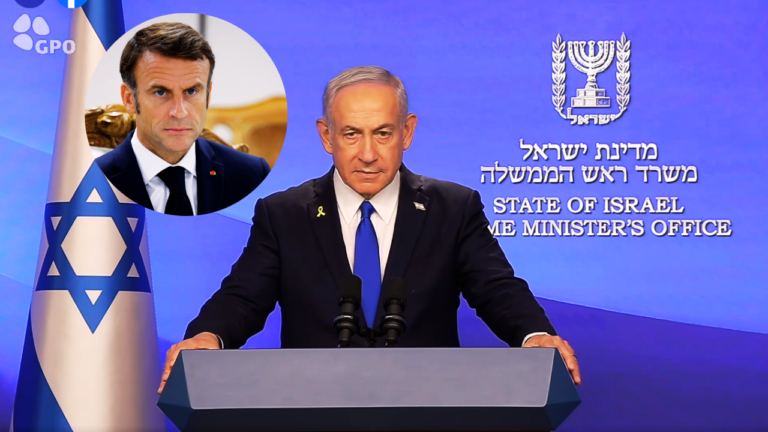
A severe diplomatic crisis erupted this week between Israel and France when French President Emmanuel Macron requested to visit Israel and Prime Minister Benjamin Netanyahu refused. The categorical refusal comes after Macron announced his intention to recognize a Palestinian state at the UN General Assembly in New York. Netanyahu conditioned the French president's visit on his withdrawal from this intention.
The current confrontation represents a real political tsunami in relations between the two countries. Macron, who has become one of the prominent voices in the international arena promoting recognition of a Palestinian state, found himself at the forefront of the struggle against Israel's policy. The French president was not content with general statements but launched a sharp attack against the Trump administration's decision not to grant visas to Palestinian representatives ahead of the UN assembly.
Macron called the American decision "unacceptable" and announced he would serve as co-chair of a two-state solution conference in New York on September 22, alongside Saudi Crown Prince Mohammed bin Salman. The stated goal of the French president is to mobilize the broadest international support for the two-state solution, which he claims constitutes "the only way to fulfill the legitimate aspirations of both peoples."
The action plan promoted by Macron includes several radical steps: a permanent ceasefire, release of all hostages, transfer of extensive humanitarian aid to Gaza residents, and sending an international force to the Gaza Strip. Additionally, he demands that Hamas be disarmed and not be responsible for any governmental role in Gaza, while strengthening the Palestinian Authority and rehabilitating the Strip.
The Israeli government responded harshly to Macron's actions. Foreign Minister Gideon Sa'ar sharply attacked the French president, claiming he is more interested in US visas for Palestinian Authority personnel than in substantial issues. According to Sa'ar, Macron does not object to the wild incitement in the Palestinian education system against Israel and Jews, nor does he protest the payments the Palestinian Authority transfers to terrorists and their family members under the "pay for slay" system.
The Israeli minister emphasized that the more severe the terrorist crime, the higher the compensation paid by the Palestinian Authority. He accused Macron of attempting to interfere from outside in a conflict he is not party to, completely disconnected from the reality on the ground after the October 7 events. According to Sa'ar, Macron destabilizes the region with his moves and drags the regional and international system into dangerous unilateral steps that will bring neither peace nor security.
In this context, a significant development was recorded on the American side. Secretary of State Marco Rubio decided to prevent the entry of a series of Palestinian leaders to the UN General Assembly this month, including Palestinian Authority Chairman Mahmoud Abbas (Abu Mazen). Rubio canceled the leaders' visas based on American law that prohibits recognition of a Palestinian state and sanctions for payments to terrorist elements.
This decision is based on internal documents revealing that Rubio signed recommendations to block visas for senior Palestinian Authority and PLO officials. US State Department spokesperson Tommy Pigott explained that in accordance with US national security laws, the Secretary of State rejects visa applications from PLO and Palestinian Authority members. Pigott emphasized that before the US can take them seriously, the Palestinian Authority and PLO must condemn terrorism, the legal process in The Hague, and attempts to advance unilateral recognition of a Palestinian state.
Israel's UN Ambassador Danny Danon appreciated the American move and saw it as moral clarity by US President Donald Trump and the Secretary of State. Danon emphasized that the message is clear: "You cannot be terror supporters and participate in the UN". However, the Israeli ambassador noted that it is still unclear whether Abu Mazen will not come, as leaders are usually allowed to speak at the UN.
The current crisis puts Israel-France relations to a difficult test. Since October 7, the gap in positions between Jerusalem and Paris has only been widening. While Israel views Macron's actions as unwanted interference threatening its security, France continues to push for a diplomatic solution according to the two-state vision.
Netanyahu's refusal to allow Macron to visit Israel sends a clear message to the international arena: Israel will not accept external pressure on the issue of Palestinian state recognition, not even from a friendly country like France. The Israeli step demonstrates the government's determination to stand by its positions, even at the cost of damaging foreign relations.
The growing tension between Israel and France occurs against the backdrop of increasing international pressure on Israel to accept a two-state solution. Macron and bin Salman are trying to build an international coalition that will impose on Israel a solution framework it views as threatening its future. Faced with this reality, Israel is forced to deteriorate into complex relations with traditional allies and rely more than ever on American support.
The refusal of Macron's visit constitutes a clear warning signal to the international community: any attempt to dictate terms to Israel or impose solutions that do not take into account its security and legitimate rights will receive a sharp and determined response.
Photo sources: AP Agency and Benjamin Netanyahu's official Facebook page – use in accordance with Section 27a of the Copyright Law