

Dim Amor
On September 20, 2025, Tami Breslavski, the mother of abducted Rom Breslavski, published a heart-wrenching post on Facebook. Her words, written with raw pain, pierced through the screen and resonated deeply in the hearts of many:
“I want my son, Rom Breslavski, home!! Rom, my beautiful boy, what have they done to you?! I must get you out of there, but I no longer know what to do, whom to turn to. I travel across the world, meeting and speaking with anyone who might have influence or be able to help in some way. But above all, I speak and plead with God every single second of the day and night—not to abandon you, to guard you and protect you, and to bring you back home to me alive. Romik, I am doing the very best I can, but the truth is that since I saw the last video of you, I broke. I am no longer the same woman. I cry and suffer with you. I only pray that you return to me alive. I love you more than anything in the world. Mom”.
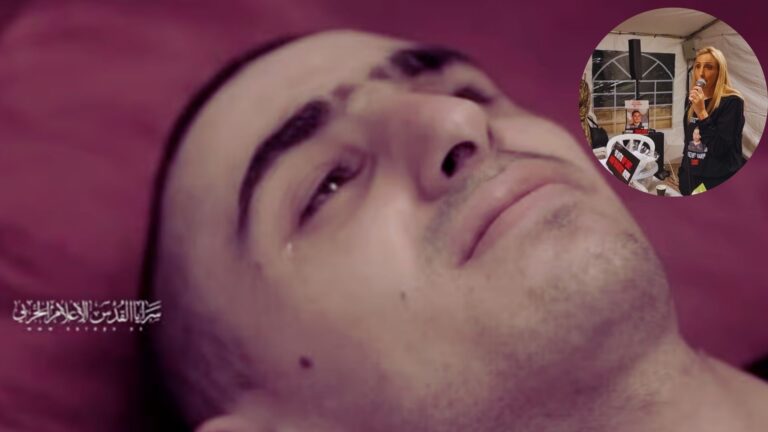
These words, from a mother shattered before our very eyes yet refusing to give up hope, make Rom’s absence all the more palpable. They were written shortly after, in August, the Islamic Jihad organization released a video showing Rom in captivity—a video that, according to the group, was filmed before contact with him was severed. The release of the footage sharpened the sense of urgency and reminded all of us just how long, drawn-out, and unbearable captivity has become.
Already in December 2024, Rom’s figure had become a national symbol. On December 15, Maakav revealed the gathering that marked his 21st birthday, held at Hostages’ Square in Tel Aviv—his second consecutive birthday spent behind the bars of captivity. The event, organized by “For the Families of the Hostages and Soldiers” and “Ayelet HaShachar and Kisufim”, brought together family, friends, and supporters to celebrate Rom’s life from afar. On makeshift tables, challah was kneaded for Shabbat—a symbolic gesture of warmth and closeness against the cold isolation of captivity.
At that time, Tami described the ongoing uncertainty in suffocating words: “We have no idea if he is eating, drinking, or keeping warm in the cold winter. Life has stopped.” She spoke of her son as a young man with “kind eyes”, who always put others before himself. “This is our Rom”, she said, “the boy who always loved to help, who fought for others. Maybe he was too much of a hero”.
Tal Moshe Yaakov, a close friend of Rom, also stood there—despite carrying his own personal grief after losing his brother, Ilan Moshe Yaakov, on October 7. “Rom was a wonderful person”, he said in a trembling voice. “Although I am about to enlist in the IDF, it is important for me to be here and support the family. We are all one family”. His words underscored the sense of unity, where private grief becomes a public struggle.
Tami’s frustration was also directed at the media: “Hardly anyone speaks about Rom in the press”. This statement highlighted the gap between the family’s pain and the broader public discourse, and the fear that the hostages might fade from the public eye.
The event at Hostages’ Square tied the family to a wider community of support. Oshrit Elisha, one of the organizers, said: “We are always ready to extend a hand and help every mother, every family, every soldier, and indeed every person in need of support”. Alongside her stood actress Shloma Rivka Levin, who stressed the importance of communal involvement and embrace. “Rom loves parties and life. He was always positive and joyful. It breaks the heart to think of him there, far away from us on his birthday”, she said.
Months have passed, and the struggle continues. That gathering symbolized unity and hope, while the post published by Tami on September 20, 2025, served as a warning sign: hope still exists, but it is shadowed by deep despair. Tami’s journey over the past year—from meetings with political figures across the globe to personal prayers in endless nights—has been distilled into one clear plea: “Rom, my beautiful boy, come home”.
Her words reveal the bare truth: behind the headlines, numbers, and statistics stand real people—families, friends, and loved ones torn daily between not knowing and hoping. Rom Breslavski is not just a figure in a video or a name on a list of hostages—he is a son, a brother, a friend. For his mother, and for the public at large, the call remains the same: to bring him home alive.