

Dim Amor
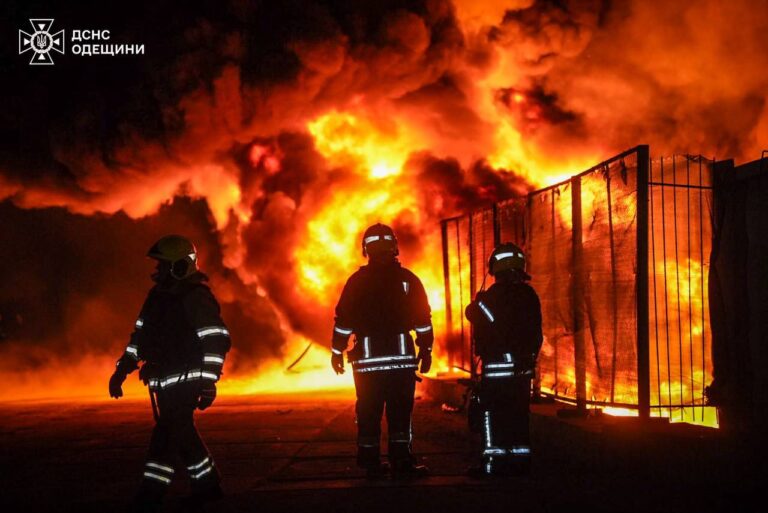
After several days of relative respite from deep ballistic strikes, Russia overnight resumed large-scale attacks across Ukraine. According to reports, the assault involved hundreds of unmanned aerial vehicles and dozens of missiles, some of which caused casualties and extensive damage to civilian infrastructure and residential buildings.
According to data released by Ukrainian authorities, at least seven people have been killed so far as a result of the bombing of a residential building in the city of Kharkiv. More than ten others were injured, including children. Among the victims were a school teacher and her young son. Rescue teams continue to operate at the site of the destruction in an effort to locate additional individuals who may still be trapped beneath the rubble.
According to a statement from Ukrainian defense officials, the country’s air defense systems managed to intercept a significant portion of the aerial threat. Of the 480 unmanned aerial vehicles launched toward the country, 453 were intercepted, and of the 29 missiles fired, 19 were shot down. Nevertheless, the weapons that managed to penetrate the defense network caused severe strikes in several locations and significant damage to civilian facilities.
Ukrainian President Volodymyr Zelensky commented on the Russian attack this morning after visiting troops on the front line in the Donetsk region in eastern Ukraine over the past 24 hours. In his remarks, he stated that Russia had launched 29 missiles toward Ukraine, nearly half of them ballistic, alongside 480 unmanned aerial vehicles, most of them of the "Shahed" type.
According to Zelensky, the targets of the strikes included energy facilities in the city of Kyiv as well as in the Khmelnytskyi and Chernivtsi regions, along with railway infrastructure in the Zhytomyr region. Damage was also reported in several additional regions, including Dnipropetrovsk, Zaporizhzhia, Vinnytsia, Odesa, Poltava, Sumy, and Cherkasy. Zelensky noted that civil services and local authorities are operating in all affected areas to address the damage and assist civilians.
In his statement, the Ukrainian president emphasized that "these brutal attacks against life must receive a response from partners", adding that Russia continues its attempts to strike Ukraine’s civilian and critical infrastructure. According to him, international support must continue, and the PURL program must maintain the same level of intensity. He also noted that Ukraine is working in cooperation with the European Union to strengthen the protection of its citizens.
At the same time, officials in Ukraine highlight the strain on the country’s air defense systems. Kyiv has long requested additional "Patriot" systems due to insufficient air defense coverage across the country. The shortage of such systems enables Russia to achieve more significant impacts during large-scale attacks such as the one recorded overnight.
According to a report in The Wall Street Journal, developments in other theaters are also affecting the supply balance of air defense systems. The war involving Iran is drawing similar defensive systems away and reducing the supply on which Ukraine relies in its struggle against large-scale Russian attacks.
Even prior to these developments, Ukraine had faced production limitations regarding advanced air defense systems. Iran’s large-scale attacks against Gulf states further deepen the shortage of such systems, a situation that makes it easier for Russia to conduct extensive strikes. The more limited Ukraine’s air defense network becomes, the greater the potential damage to infrastructure and urban centers.
Alongside the military developments, economic sources note that the surge in global oil prices is strengthening Russia’s budget. Rising energy revenues provide Moscow with additional fiscal space to continue managing its military campaign.
Under these circumstances, Ukraine continues to face both military and economic pressures simultaneously, while large-scale attacks such as the one recorded overnight underscore the vulnerability of civilian infrastructure and the ongoing need for international support and strengthened air defense capabilities across the country.