

Dim Amor
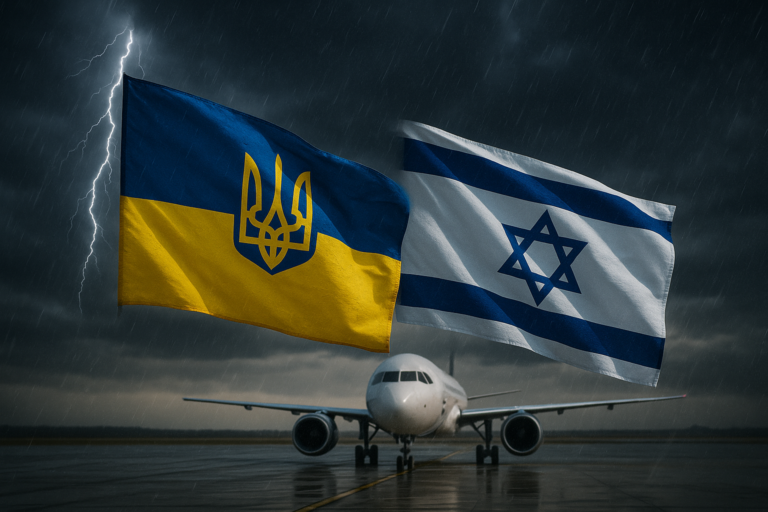
Approximately 35,000 Ukrainian citizens residing in Israel as war refugees face fateful uncertainty as the end of 2025 approaches. According to the current policy of the Ministry of Interior, their residence permits will expire on December 31, 2025, and what happens after that remains unclear.
A senior source in the Ministry of Interior told the "Maakav" editorial staff that the validity of residence permits for Ukrainian citizens in Israel extends until December 31, 2025. Starting January 1, 2026, the source noted, the State of Israel will have the legal authority to take deportation measures against them. However, the source refrained from detailing the ministry's concrete plans regarding the implementation of this arrangement.
Simultaneously, "Maakav" was informed by a source in the Prime Minister's Office that the government is currently negotiating with Canada and other countries, aiming to enable the absorption of Ukrainian refugees in their territories. However, no details were provided regarding the scope of countries involved, the number of refugees each might agree to absorb, or the expected timeframes for advancing the negotiations.
The situation becomes even more complicated when considering that during the years Ukrainians have stayed in Israel, they have managed to build new lives. Many of them have established families, had children born on Israeli soil, purchased apartments, and opened businesses. The central question that arises is what will happen to Ukrainian children born in Israel during the war period – will they be considered Israeli citizens or will they too have to leave the country with their parents.
According to an official document provided to "Maakav" by the Population and Immigration Authority and published on January 11, 2024, then-Interior Minister Moshe Arbel established a clear policy: "This policy is valid until December 31, 2025, or until the end of the war in Ukraine and the possibility of returning to it, whichever comes first". The document was published in four languages – Hebrew, English, Russian, and Arabic, to ensure the information reaches all relevant populations.
The current policy stipulates that no enforcement actions will be taken against the employment of Ukrainian citizens, provided that 90 days have passed since their entry into the country and they possess a valid Ukrainian passport. Employers are required to verify that the Ukrainian employee meets these conditions. Additionally, it was decided to extend B/2 type visit permits (tourist) for Ukrainian citizens who were legally staying in Israel on the day the war began or who entered afterward.
Israel's Supreme Court deliberated in 2024 on the legal status of Ukrainian citizens, especially those who arrived on tourist visas or without any permit at all. Following the legal decisions, the Ministry of Interior published a directive granting Ukrainian citizens residence permits, regardless of their initial status upon arrival in Israel.
Furthermore, it was decided not to impose sanctions against employers who employ Ukrainian citizens, provided they meet the required criteria: presenting a valid Ukrainian passport and staying in the country for more than ninety days. Tourist visas (B/1) were extended until the end of 2025, or until the end of the war in Ukraine and the possibility of returning to it – whichever comes first.
The policy leaves many questions unanswered. What will happen if the war in Ukraine continues beyond December 2025? Will Israel be willing to extend the residence permits again? What is the fate of the Ukrainian community that has established itself in Israel and built families and businesses here?
The official document states that "at the end of this period, the policy will be re-examined according to current data". However, it is unclear what criteria the decision will be based on, and who will be the parties involved in making the decision.
The negotiations with Canada and other countries raise additional questions: Is this a solution for the entire Ukrainian population in Israel or only part of it? What will happen to those who cannot be absorbed by other countries? Will they have the option to return to Ukraine if the security situation there still does not allow for safe return?
The Ukrainian community in Israel includes a wide variety of people: families with young children, elderly people, professionals who found work in Israel, students, and discharged soldiers. Each group faces different challenges and may need different solutions.
The issue of children born in Israel during the stay period presents a complex legal and moral challenge. According to Israeli citizenship law, a child born in Israel does not automatically receive Israeli citizenship but requires special approval. The question is whether these children will be able to receive permanent legal status in Israel or whether they will be forced to leave with their parents.
The economic situation of the refugees adds another layer of complexity. Many of them have invested all their savings in establishing new lives in Israel – purchasing apartments, opening businesses, registering children in schools. Moving to another country will involve heavy economic losses and difficulty starting over in a new place.
Israeli authorities face a complex dilemma: on one hand, they want to help war refugees in distress, and on the other hand, they need to manage responsible immigration policy and consider the country's limitations in absorbing long-term migrants.
Currently, no official source is prepared to give clear answers regarding concrete plans for dealing with the situation. Ukrainian refugees and their families remain in a state of complete uncertainty about their future, as time runs out toward December 2025.
The situation requires quick decisions and clarity from the authorities, both regarding the possibility of extending the stay and regarding alternative plans for dignified and organized departure from Israel. Until then, approximately 35,000 people are waiting for answers about their future.
Graphic design: Maakav