


Dim Amor
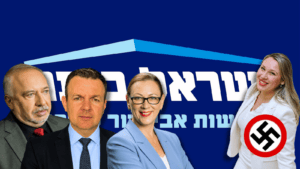
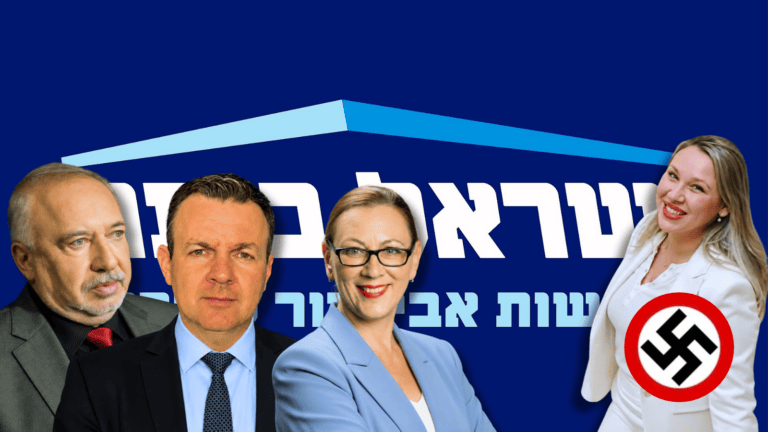
After a court ruling revealed that an Israeli citizen had published social media posts describing herself as a "Nazi", Knesset members Evgeny Sova and Yulia Malinovsky, both representing Avigdor Lieberman’s party, have declined to issue an explicit condemnation. Has respect for Holocaust survivors been pushed aside?
A public and legal controversy has erupted over the case of a kindergarten operator from Ashdod, yet some lawmakers in the corridors of the Knesset have chosen to remain conspicuously silent. While Israeli society remains deeply sensitive to any expression of sympathy for or identification with Nazi ideology, representatives of Yisrael Beiteinu have responded to serious judicial findings in a manner that raises troubling questions about their apparent indifference.
The Court Ruling That Exposed the Troubling Posts
The controversy came to public attention following an investigative report published by the Israeli news outlet Maakav on September 27, 2026. The investigation followed a court order granting access to previously restricted case files (Civil Case No. 2331-02-23), issued by Judge Anat Chulta, Deputy President of the Magistrate's Court in Kiryat Gat.
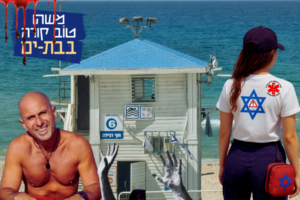
According to the judgment, Anastasia Rolovets-Novikova, a Ukrainian-born woman who acquired Israeli citizenship through marriage to an Israeli citizen and operated a private kindergarten called "Mashenka", repeatedly added the Ukrainian word for "Nazi" in its feminine form to photographs of herself posted on social media.
The court sharply criticized Novikova’s explanations concerning these publications.
The legal proceedings also examined political activities allegedly associated with the kindergarten, including the display of Ukrainian flags and the circulation of videos expressing wishes for the death of the Russian president.
In a defamation lawsuit brought by Novikova against several social media users, including Eduard Batkis, the court partially upheld her claims concerning offensive statements. However, it rejected allegations that the defendants were responsible for threats or acts of vandalism.
Under Section 3 of Israel's Prohibition of Holocaust Denial Law, 1986, publicly expressing praise, sympathy, or identification with Nazi crimes may constitute a criminal offense punishable under the law.
Although complaints filed in connection with the matter were subsequently closed by the police, the existence of posts featuring the word "Nazi", published by an Israeli citizen who operated an educational institution, raises serious ethical and public-interest questions.
Responses That Raise Further Questions: "I Don't Have to Respond"
Given the seriousness of the findings outlined in the court ruling, direct press inquiries were sent on October 6, 2026, to Knesset members representing Yisrael Beiteinu, the party led by Avigdor Lieberman.
The purpose was to obtain a clear, unequivocal statement condemning expressions of identification with Nazism in the State of Israel.
Instead, the responses received from MK Evgeny Sova and MK Yulia Malinovsky have raised serious questions about their responsibilities as elected public officials.
- MK Evgeny Sova responded dismissively: "I don't have to respond to everything. I'll forward your inquiry to the spokesperson's office".
- MK Yulia Malinovsky offered an equally brief response: "Contact the spokesperson's office".
In practice, it appears that despite assurances that the matter would be referred to the spokesperson's office – an operation also funded through the state budget and taxpayers' money – no substantive response or official position was provided.
Repeated telephone calls and follow-up inquiries made after the relevant court documents had been forwarded went unanswered.
Public Indifference or Disrespect for the Memory of the Holocaust?
The conduct of lawmakers from Lieberman's party raises serious questions, particularly given that these are elected representatives who seek the public's trust while receiving salaries and resources funded by taxpayers.
In a country built, in part, as a refuge for a people who survived the horrors of the Holocaust, every elected official should be expected to take a clear, firm, and uncompromising stand against any manifestation of Nazi ideology.
The conduct of MK Evgeny Sova is particularly troubling. Although he promised to forward our journalistic inquiry to his spokesperson's office, no substantive response has been received to date.
Referring journalists to a spokesperson without subsequently providing a clear position may be perceived as turning one's back on public sentiment, Holocaust survivors, and their families. It may also be viewed as a disregard for an elected official's responsibility to answer questions of profound moral and historical significance.
This leads to a simple question: Ultimately, are voters electing MK Evgeny Sova or his spokesperson?
Is the lawmakers' reluctance to issue an explicit public condemnation driven by political considerations, or does it reflect a continuing disregard for their obligations of accountability and transparency toward the public?
As of the publication of this article, neither the lawmakers concerned nor the Yisrael Beiteinu party had issued an official condemnation.
Full video recordings and documentation of the journalists' approaches to the elected representatives will be published at a later date.
P.S. Why do we seem to remember the horrors of the Holocaust and the crimes committed by the Nazis only on Holocaust Remembrance Day?
Should the struggle against Nazism, antisemitism, and expressions of solidarity with murderous ideologies be revived on just one day each year?
Remembering the Holocaust is not merely an annual ceremony. It is a moral and civic responsibility that demands our commitment every single day of the year.