




Dim Amor
A widening diplomatic crisis is unfolding between the United States and Denmark over the Greenland issue, following a series of actions and statements by the administration of U.S. President Donald Trump that have triggered unprecedented anger in Copenhagen and concern within Denmark’s political and security establishments.
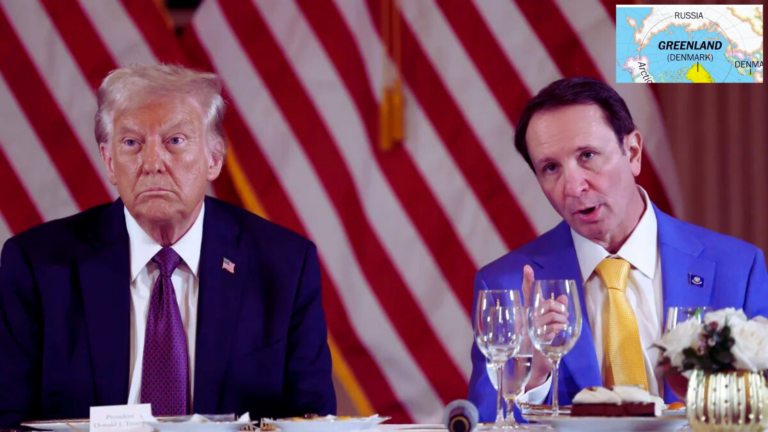
The confrontation escalated sharply in recent days after the White House announced the appointment of Louisiana Governor Jeff Landry as Special Envoy for Greenland. While the appointment itself was perceived in Denmark as an unusual move, tensions deepened after Landry publicly stated during his appointment ceremony that it would be an "honor" for him to see Greenland become part of the United States.
Greenland is a self-governing territory with broad autonomous powers, under full Danish sovereignty and recognized as such under international law. Since gaining expanded autonomy in 2009, the island has managed many areas of internal governance independently, while foreign policy, security, and sovereignty remain the responsibility of Copenhagen. Against this backdrop, Denmark views the appointment of a dedicated U.S. envoy to Greenland – and especially statements suggesting a change in sovereignty as a direct challenge to fundamental principles of international law and state sovereignty.
The Danish government responded forcefully. Media outlets in Copenhagen emphasized that political leaders regard the move as unacceptable behavior by a close ally. Denmark is a full member of NATO, and security cooperation with Washington has for decades been a cornerstone of Danish foreign policy.
Danish Foreign Minister Lars Løkke Rasmussen addressed the appointment and the envoy’s remarks in a television interview, stating that he was "particularly disturbed by the statements about Greenland becoming part of the United States", adding that Denmark considers such remarks "completely unacceptable". His comments reflect a unified stance among Danish officials, who have stressed that the question of sovereignty is not open for discussion.
The current tensions are unfolding against a broader backdrop of shifting threat perceptions in Copenhagen. Approximately ten days ago, Denmark’s intelligence services published their annual threat assessment, which for the first time identified the United States as a factor with "potential security risk" for Denmark. The report clarified that this does not constitute an immediate military threat, but rather a strategic development stemming from changes in U.S. political and security conduct and growing divergences between American policies and Danish and European interests.
According to analyses published in Danish and Scandinavian media, the U.S. envoy’s remarks are seen as a tangible illustration of the warnings outlined in the intelligence report. Political figures in Copenhagen emphasize that even rhetorical references to altering the island’s status undermine trust between the countries and raise questions about the United States’ commitment to the principles underpinning the international order among allied nations.
In Greenland itself, reactions were measured yet firm. Local leaders reiterated that the island’s future will be determined solely by its residents within the existing constitutional framework with Denmark, and that any discussion of external sovereignty is irrelevant. At the same time, calls are growing to accelerate internal debates on the island regarding its future status and its relationship with Copenhagen, amid increasing international interest in the Arctic region.
Efforts are now underway to prevent further escalation between Washington and Copenhagen. Diplomatic sources report quiet contacts aimed at clarifying positions and easing tensions, though Danish officials stress that a public and unequivocal affirmation by the U.S. administration of respect for Denmark’s sovereignty and Greenland’s status is required.
The current crisis underscores the growing sensitivity surrounding the Arctic, which is increasingly viewed as an emerging strategic arena due to climate change, natural resources, and future maritime routes. For Denmark, Greenland is not merely a territorial matter, but a central pillar of its political and security identity. Recent developments place relations with the United States under a significant test and raise broader questions about the stability of alliance relationships in a changing world.
Photo: AP. Used in accordance with Section 27A of the Copyright Law.