
Dim Amor
Beneath the surface of tensions between Israel and Ukraine, a series of severe incidents emerging from Ukraine in recent days is erupting, confronting the international community with difficult questions about antisemitism, diplomatic silence, and ingratitude. At the storm's center: the arson of a 180-year-old historic synagogue, a violent antisemitic attack in the capital Kyiv, and a shocking wave of online responses exposing the depth of hatred.
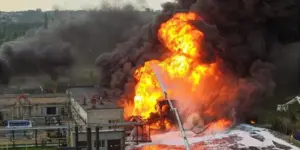
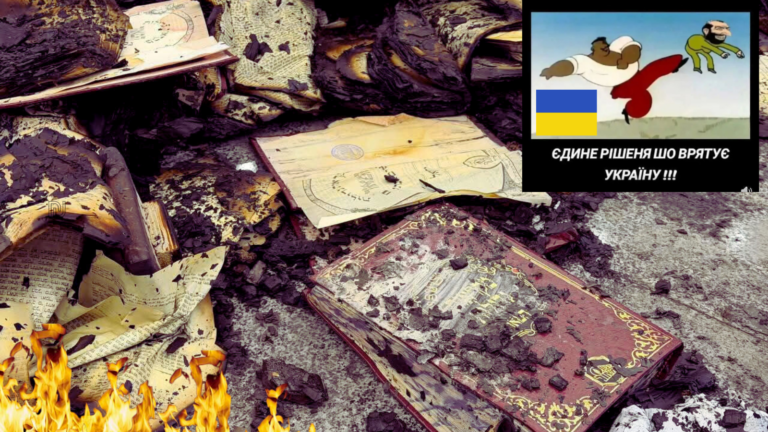
In the Sadagora suburb of Chernivtsi in western Ukraine, a man set fire to the historic Sadagora Synagogue. No one was physically injured, but the spiritual and material damage is immense. Israel's Ambassador to Ukraine, Michael Brodsky, reported on his Telegram channel that according to preliminary information, the person who carried out the arson suffers from a mental disorder. He was arrested by police forces, and the synagogue building was damaged.
According to data from the United Jewish Federation of Ukraine, the man entered the synagogue when the guard stepped outside the gates, collected books, and carried out the arson. Ukrainian media allegedly attempted to whitewash the antisemitic act. As part of the coverage, the public was informed that about a month earlier, the same person attempted to set fire to a church (while Ukraine is seeking EU membership and is currently in the examination phase, an image of antisemitism and racism is not a desirable asset). However, psychiatric examinations conducted after his arrest determined he is competent to stand trial and bear responsibility for his actions. This fact undermines the attempt to present the incident as merely the act of a "mentally ill person" and strengthens the claim that this was a conscious antisemitic act.
According to reports, the church he previously attempted to burn was a closed Russian church, and the act was presented by him as a political act against "the Russian enemy". However, this does not diminish the severity of the actions: burning a synagogue, like burning any other religious building, is a violent, extremist, and deliberate action that harms an entire community and the fabric of shared life.
The Ukrainian channel C-4 extensively reported on the synagogue arson. One could have expected widespread public shock, and indeed condemnation responses were recorded, but a deep look at user comments reveals a disturbing picture: a significant portion of comments were antisemitic, harsh, and sometimes explicitly violent. For example, Ruslan Ksian wrote: "This is sacred Ukrainian land. Let them take all their property and return to their homes (Israel), and if not – then everyone to the front, even seventeen-year-olds". Inga Sedon added: "Ruslan Ksian, you're right. They live on Ukrainian land, but why don't they go to war and defend Ukraine? So they're allowed to harm Ukraine, but not to fight?".
Pavlo Shkarlet posted an image showing a Ukrainian Cossack expelling a Jew from Ukraine. On the image was written: "The only solution to save Ukraine is to expel the Jews from Ukraine". One wonders whether a caricature would be published in Israel showing a Jew "expelling" a Ukrainian from Israel. In Ukraine there are no Jewish refugees, and the Jewish community is not perceived as a burden on the state. In Israel, by contrast, Ukrainian refugees are presented as an economic and social burden: costs of millions, increases in crime, drugs, theft and assault, as well as identity issues concerning marriages and births of children who are not Jewish according to Halacha. Despite this, in Israel they remain silent — and certainly Jews do not attack Ukrainian refugees or spray them with tear gas.
Maria Myk wrote: "And what do you say about the fact that our fighters are being killed defending the land, while these people with payot are already taking over Uman, building houses and hotels? What is this mess? Let them go to the trenches". Bohdan Rodzynsky joined in: "They did right, these payot-wearers are sons of bitches".
The number of hearts and likes accumulated under antisemitic comments on social networks indicates a serious and alarming phenomenon that is neither marginal nor incidental, but reflects a problematic and dangerous public climate. Simultaneously, a complaint was filed with the Ukrainian police regarding inciting, offensive, and racist posts, including caricatures with characteristics reminiscent of Nazi propaganda from 1930s Germany, explicitly anti-Israeli and antisemitic content. The question being asked is: was even one person arrested? The answer is clear – no. In practice, everything is permitted when the target is Jews. All the comments were also forwarded to the office of the Attorney General of Ukraine, but until this moment no response has been received.
The Ukrainian ambassador to Israel has not published a single word of condemnation. Instead, he chooses to engage in public criticism against Israel's Prime Minister Benjamin Netanyahu, even presenting him in a negative and immoral light, as evident from his statements in an interview with Ynet. It must be emphasized: Jews have not burned a single Ukrainian church in Israel – and such churches exist. On the contrary: the State of Israel continues, from public funds, to finance the stay of approximately 100,000 Ukrainian refugees, grant them rights, shelter, medical care, and social conditions. And in return – burning of synagogues, attacks against Jews, and thunderous silence from Ukraine's official representative, while politically inciting against Israel's Prime Minister.
In Ukrainian society there exists a deep misunderstanding: there are those who try to equate Jewish tourists arriving in Uman with Ukrainian refugees living in Israel. This is an incorrect and misleading comparison. Tourists arriving in Uman contribute to the local economy, support Ukrainian families, and inject money into the region. In contrast, the absorption of Ukrainian refugees in Israel constitutes a heavy economic burden, on the scale of millions of shekels per month, and the temporary stay has in practice become a multi-year stay. Some of the refugees even voice problematic statements, including use of terms related to the Holocaust and support for extremist ideologies.
How Much Does Ukraine Earn from Uman Tourists?
Number of Pilgrims (2024–2025) Every year, tens of thousands of Hasidim arrive in Uman for Rosh Hashanah celebrations – typically between 30,000 and 40,000 people. The flow continues despite the war, absence of direct flight routes, and significant logistical constraints.
Tourism and Tax Revenue In 2025, the tourism levy in Ukraine secured record revenues for local community coffers – over 142 million hryvnia during the first six months of the year. Extrapolated for the entire year, accumulated tourism revenues are estimated in the range of 280-300 million hryvnia. This is revenue from Hasidic pilgrimage alone.
Direct Contribution of Pilgrims More precise data on the contribution of Hasidic pilgrims can be tracked at the level of Uman city. In certain years, the pilgrimage secured millions of hryvnia for the budget. Thus, in 2019, pilgrims transferred about 7 million hryvnia to the municipal budget and about 5.36 million hryvnia to the state budget – a total of about 12.1 million hryvnia solely in the form of taxes and mandatory payments.
In 2025, the tourism levy in Uman, limited to hotel accommodation tax, from pilgrims is estimated at about 20 million hryvnia.
Estimated Pilgrim Expenditures According to approximate estimates, each pilgrim spends in Uman no less than $1,500 per week on accommodation, food, transportation, and purchases. With tens of thousands of pilgrims, cumulative expenditures amount to hundreds of millions of dollars circulating directly in Ukraine's economy.
Additional Effect: Aviation and Logistics Until 2022, Ukrainian airlines earned from Hasidic pilgrimage up to one million dollars per season in the August–October period, related to the religious holidays of Rosh Hashanah and Sukkot, beyond revenue from regular flights. After the closure of airspace, similar amounts are invested in alternative routes through third countries, including charter flights and land transport.
It should be taken into account that Uman is only part of the overall picture. Until 2022, pilgrims and tourists also actively visited Kyiv and Odessa, which further enhanced the economic effect.
The Hasidic pilgrimage brings Ukraine and regional communities hundreds of millions of hryvnia in direct and indirect revenues annually through tourism levies, taxes, accommodation, food, transportation, and commerce. At the national level, the exact amount is not officially published, but local estimates document a stable and significant economic contribution.
Ukrainian Refugees: Annual Cost of Billions
Since the outbreak of war in Ukraine in 2022, approximately 100-120 thousand Ukrainian citizens entered Israel, according to official and unofficial estimates.
Of this number:
- About 25-30 thousand received immigrant status.
- About 30-40 thousand received temporary residence permits for humanitarian reasons.
- The remainder left Israel over time or reside there in unregulated status.
As of 2024-2025, the accepted estimate is that approximately 35-45 thousand Ukrainian citizens actually reside in Israel without citizenship.
The direct budgetary cost – in a conservative annual estimate – includes mainly housing assistance and grants, health expenses (health funds and emergency care), children's education, welfare, municipal assistance, enforcement and regularization procedures. Professional estimates speak of an average public cost of about 50,000 shekels per year per person.
In a broad scenario, taking into account about 100,000 long-term residents, this is a cumulative expenditure on the scale of billions of shekels per year, in the order of magnitude of about 6 billion shekels.
When adding indirect costs – burden on the healthcare and education systems, pressure on the housing market and public housing, enforcement expenses and the justice system, marginal crime and urban infrastructure – the actual economic burden may be even higher.
Brief summary: In a conservative estimate, the stay of Ukrainian refugees in Israel represents an annual budgetary cost of about 7 billion shekels.
Tear Gas Attack in Kyiv
Parallel to the arson incident, the Jewish community in Kyiv's Obolon district reported an additional antisemitic incident that occurred over the weekend. According to the report, a Jewish man wearing a kippah was attacked with tear gas outside the synagogue. When one of the worshippers exited the building, attackers sprayed him with tear gas and fled. As a result of the attack, the victim suffered severe burns to his eyes and skin. Community members emphasized this was not a random incident. According to them, the same group of young people was already observed on Friday near the synagogue, shouting antisemitic slogans, mocking worshippers, and harassing them. The community statement said: "This is a deliberate, cruel, and premeditated antisemitic act". It was also noted that a day earlier, a group of young people was seen around the synagogue provoking worshippers and calling antisemitic slurs toward the community rabbi.
In a previous incident in October in Kyiv, a group of young people with Nazi symbols attacked a Jew near a synagogue. The attackers approached the synagogue building, shouted antisemitic slogans, and displayed Nazi salutes. When a representative of the Jewish community came out to them from the synagogue, they sprayed tear gas at him from canisters.
Burial of Burned Holy Books
As of December 10, 2025, at the Jewish cemetery in Chernivtsi, among ancient stone tombstones and in air carrying the scent of mild winter, an event occurred that is difficult to describe in words. Here were buried the charred remains of holy books that were burned during the arson of the Sadagora Synagogue. Book fragments, deformed by fire heat, blackened, fragile in places like dry leaves, were laid in fabric specially prepared for burial. Before burial, a prayer was said. Not just traditional ceremonial words, but a request for forgiveness. The Jewish community asked forgiveness for failing to protect the sacred.
Joseph Friedman arrived at the ceremony, a descendant of the Sadagora Rebbe, a dynasty that once filled these places with life, hope, and spiritual melody. A delegation from Israel also came with him. Pain over the desecration of the sacred was visible in their eyes. Friedman recited the Kaddish prayer over the burned word. After the ceremony, community members said this burial is not an end, but the beginning of restoration.
Calls to Action
Against the background of synagogue burnings and the alarming rise in antisemitic incidents in Ukraine, an organized appeal to Knesset members is being promoted. First, to examine returning Ukrainian refugees to their country, so they can take part in defending their land. Second, to renew an official appeal to the Ukrainian government to transfer Rabbi Nachman's grave from Uman to Israel, to Jerusalem, as well as to transfer holy books from Ukraine – a move that would prevent the security risk involved in Jews traveling to Ukraine. Already in the 1990s, a similar appeal was submitted to transfer Rabbi Nachman's grave, but Ukraine refused. The reason was clear then and is clear today: Jews are perceived as a source of income, even when hostility prevails toward them.
At the Interior Ministry, thousands of applications from Ukrainian Jews requesting to immigrate to Israel are accumulating. Eligibility exists, but waiting times are long and delaying. Action must be taken to significantly shorten queues and accelerate procedures. For many Jews, today's Ukraine is no longer a safe place.
Photos: Used in accordance with Section 27a of the Copyright Law