



Dim Amor
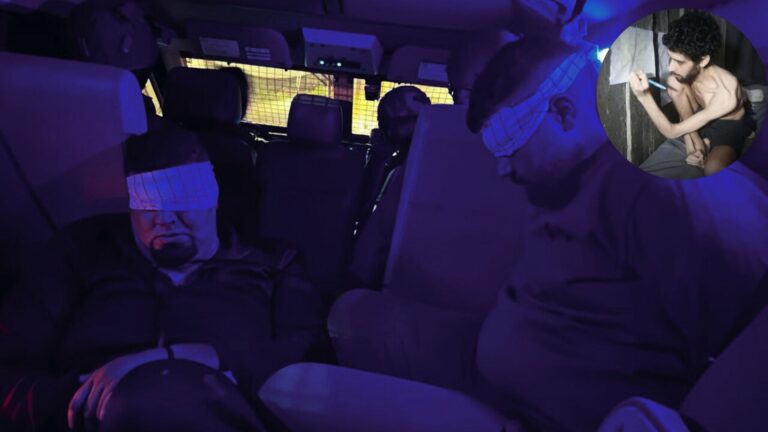
Exceptional documentation transmitted by IDF soldiers in recent days from Gaza to the "Maakav" system exposes a shocking gap between the condition of Israeli hostages and the living conditions of Hamas members. The photos sent by soldiers to the system present a harsh reality: Palestinians identified with the organization are captured in detention while extremely overweight, some apparently weighing over one hundred kilograms, in complete contrast to the appearance of the thin and pale Israeli hostages appearing in published photographs.
These sights evoke a shocking comparison to the condition of the hostages, whose photos reveal a deteriorated health state reminiscent of dark scenes from the Holocaust period. The thin and exhausted figures of the hostages stand in sharp contrast to the fat bodies of Hamas members, providing unambiguous visual testimony to the inconceivable gap between the two populations.
Foreign Minister Gideon Sa'ar has already approached his counterparts around the world in the past and called on them to issue a clear call for the immediate release of the hostages. "It is inconceivable that civilized nations would stand by in the face of Hamas's intolerable barbarism", Sa'ar emphasized in his appeal.
Months ago, difficult proof-of-life videos of hostages Rom Braslavsky and Avitar David were distributed. The videos show their severe physical and psychological distress, but their very existence confirmed they are still alive. These images serve as proof of their existence while simultaneously illustrating the inhumane living conditions in which they are held – the daily humiliation and immediate danger threatening their lives.
The sharp gap between the appearance of the thin, pale and weakened-to-the-limit hostages and the sight of the fat Hamas operatives emphasizes the cynical cruelty of the terrorist organization. While the hostages barely survive in unbearably harsh conditions, Hamas leaders and their supporters enjoy abundance and comfort, without any sign of distress or want.
The photos now exposed to the eyes of the public and the world cast a heavy shadow and lead to growing calls to increase political and international pressure on Hamas. The State of Israel and the hostages' families see this documentation as additional evidence of the urgent need to activate all possible pressure mechanisms – political, economic and humanitarian – to bring about a swift end to the affair and the release of all hostages.
Israeli officials emphasize that although these are signs of life that hold a glimmer of hope, they are also searing testimony to the depth of ongoing suffering. The Israeli government and IDF continue to operate on all fronts for the return of the hostages, while mobilizing broad international support.
The latest photographs present the world with a sharp and unambiguous sight: on one hand, exhausted and pale hostages embodying in their bodies the most severe violation of human rights; on the other hand, terrorists enjoying nutritional surplus, tangible evidence of the enormous gap between "hunger in Gaza" propaganda and the reality of their actual lives. This comparison leaves an unequivocal impression: while Hamas leads a lifestyle of excess, the hostages pay with their bodies and souls the heaviest price.
The new documentation joins a series of extensive testimonies that have accumulated since the kidnapping of Israelis on 10.7. They strengthen the call for decisive international action and serve as additional evidence of the urgent need to increase pressure on the terrorist organization. The State of Israel continues to demand the immediate release of the hostages, while their families remain in constant anxiety and eagerly await every fragment of information or additional sign of life.
Around the world, voices are multiplying that see the photos as "decisive proof" of Hamas's cruelty and the urgent need to end the suffering. International figures express shock at the sights and demand that the international community take additional steps to increase pressure on the terrorist organization.
Thus the latest photos become not only chilling testimony about the condition of the hostages, but also a historical document that will be etched in national and global memory as a symbol of the gap between human cruelty and the call for justice. They emphasize the blatant contrast between blind barbarism and the rescue efforts of those seeking to preserve lives and return the hostages to their homes.
The harsh reality revealed in the photos strengthens calls to intensify diplomatic and humanitarian efforts, and places before the international community a clear moral challenge: will the world stand by in the face of continued suffering, or will it take practical steps to bring an end to this intolerable situation.