




Dim Amor
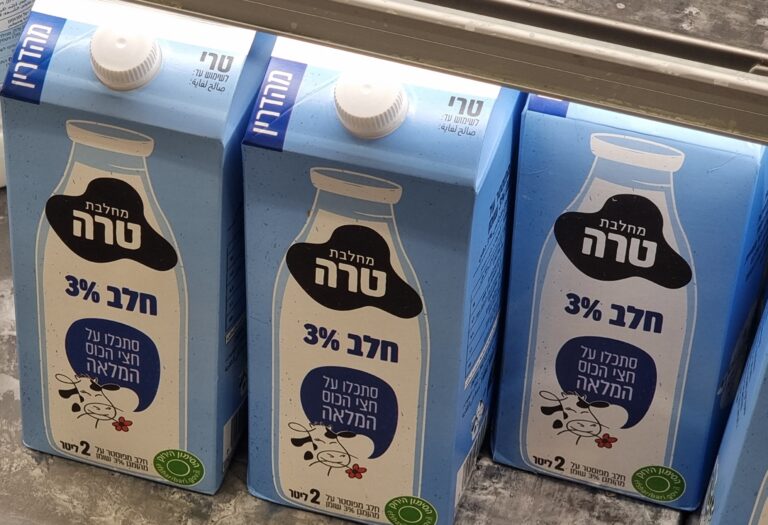
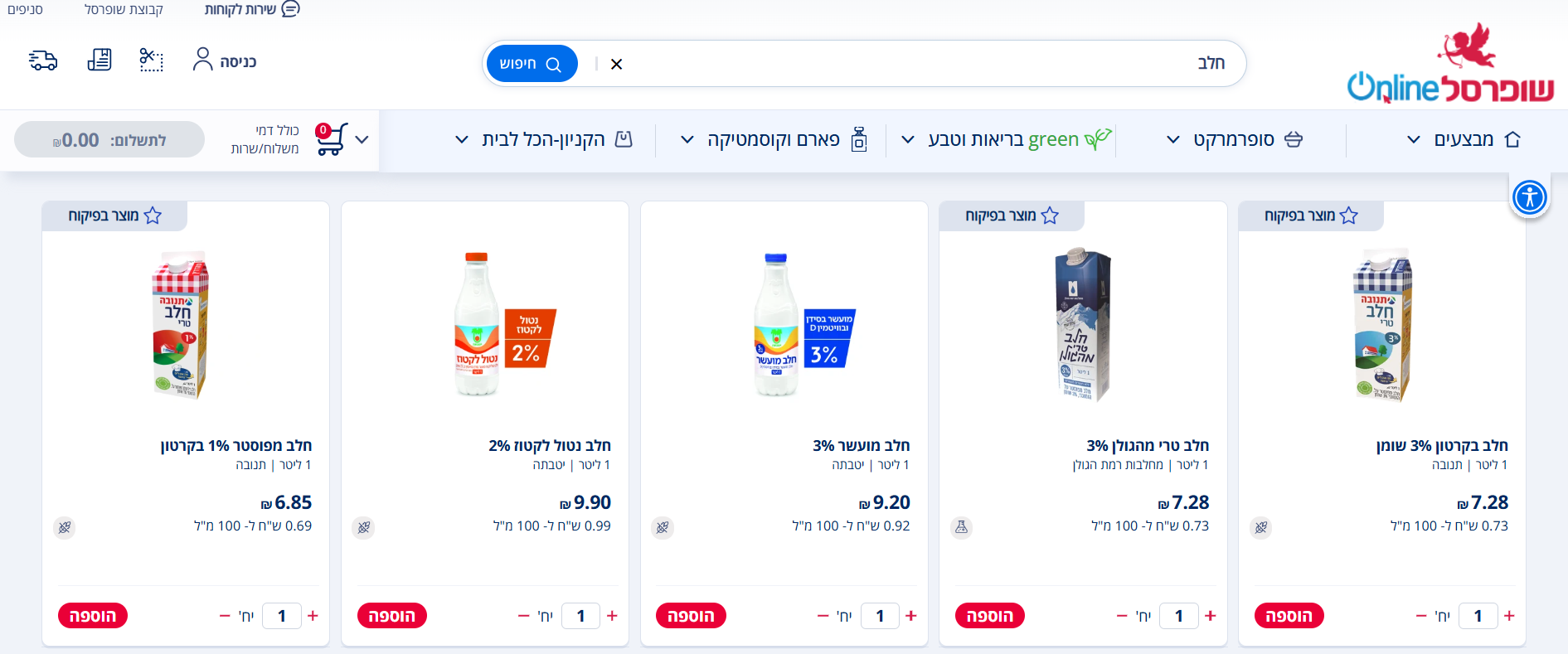
The price of milk in Israel continues to climb, following the findings of the State Comptroller’s 2023 report, which concluded that the local price was among the highest worldwide. While in 2023 the price of a liter of regulated milk stood at approximately 6.2 shekels, by 2026 it had reached around 7.2 shekels per liter, a figure reflecting a further rise in the cost of living in the dairy sector.
The State Comptroller’s report published in 2023 presented a comprehensive overview of Israel’s dairy industry and emphasized its central role in the local diet. Milk and dairy products constitute a primary source of animal protein and calcium in the average Israeli diet, and the state has planned the sector along the entire production chain since before the establishment of the state.
Planning is carried out through supervision of production quotas for dairy farmers, setting a target price per liter of raw milk, controlling import volumes, and regulating the prices of controlled dairy products for consumers. The legal framework is anchored primarily in the Milk Market Planning Law, 2011, as well as in regulations and orders enacted under it.
Between 1998 and 2022, five agreements and reforms were signed in the dairy sector between the state and producers’ organizations. Within this framework, the number of dairy farms declined, while the number of cows per farm increased. At the same time, the target price decreased relative to projections without the reforms, and the government provided efficiency grants and retirement compensation to farmers.
Key data attached to the State Comptroller’s report point to significant gaps between Israel and European Union countries. The price of raw milk in Israel was estimated at about €62.04 per 100 kilograms, approximately 219 shekels, around 24% higher than the European average of about €50.17 per 100 kilograms.
A substantial gap was also recorded at the consumer level: a liter of regular milk in Israel was estimated at about $1.81, or roughly 6.2 shekels, compared with an average of about $1.02 in European Union countries, a gap of approximately 77%.
According to the report’s data, in 2021 the number of registered dairy cows in Israel stood at 118,611, while the average consumption of milk and dairy products reached 161 liters per capita per year. That year, approximately 1.54 billion liters of raw milk were produced in Israel, and dairy imports totaled about $169 million.
In 2021, Israel had approximately 686 dairy farms, of which 440 were located in national priority areas. The average milk yield per cow stood at 12,003 kilograms per year, the highest figure in the world. About 41.2% of the milk was produced on farms in the family sector, while the remainder was concentrated mainly in the cooperative sector.
The audit conducted between October 2021 and November 2022 at the Ministry of Agriculture, the Dairy Council, and other government bodies examined the mechanisms for setting the target price, the impact of kashrut requirements, and oversight of animal welfare.
One of the central findings concerned the price of raw milk in Israel, which was about 24% higher than the European average. Among the factors cited for the gap was that feed costs for cows in Israel were approximately 33.3% higher than in the European Union, alongside the effects of climate conditions and differences in government support mechanisms.
The report also pointed to deficiencies in the mechanism for determining the target price. The price is set on the basis of a biennial survey conducted by a steering committee through an external provider, but it was found that there is insufficient oversight of the survey methodology, data accuracy, and calculation precision.
It was further found that about 22% of the farms selected for the sample refused to participate in the survey, as participation was not mandated. This refusal rate, the report stated, could undermine the validity of the results used as the basis for price calculations.
In addition, the report highlighted a problem in calculating labor costs for dairy farmers. Although farmers operate in the agricultural sector, their wages in the survey were calculated according to the overall average wage in the economy, significantly higher than wages in agriculture, thereby affecting the target price.
It was also noted that farms in the family sector were, on average, loss-making over the years, while farms in the cooperative sector demonstrated higher profitability, a gap that also influenced the price structure.
The report also addressed the structure of support in the dairy sector. According to OECD estimates, in 2021 the share of indirect support to farmers in Israel reached about 90.7% of total support, even though Israel had committed in 1995 to reduce such support under an international trade agreement.
Alongside the price issue, the report pointed to additional problems, including recurring shortages of dairy products during the Tishrei holiday period. In 2021, for example, a shortage of about 3 million liters of pasteurized milk was recorded, approximately 9% of monthly consumption.
It was further found that the Ministry of Agriculture and the Dairy Council lack the authority to receive regular and up-to-date production data from dairies, and they cannot instruct the redistribution of surplus milk between different plants.
Regarding animal welfare, professional assessments indicated that about 20% of dairy farms in Israel are in a very severe condition, yet oversight in this field was found to be lacking, and specific regulations required to prevent animal cruelty have not been enacted.
The State Comptroller recommended that the Ministry of Agriculture and the Dairy Council implement proper oversight of the milk survey, examine the wage calculation method in the sector, and update the target price mechanism so that it serves planning objectives and contributes to reducing consumer prices.
It was also recommended to implement OECD recommendations and Israel’s commitments to transition from indirect to direct support in the sector, and to examine additional policy tools used in other countries.
Israel’s dairy sector is characterized by a state planning and supervision mechanism throughout the entire production chain, a situation that, according to the report, currently exists in only one other country in the world: Canada. The price of raw milk has a direct impact on the final consumer price and on the cost of living.
The audit findings point to deficiencies in three central areas: the high price relative to global levels, oversight of animal welfare, and ensuring a steady supply while reducing shortages during holiday periods.
Against this backdrop, the increase in the price of a liter of milk between 2023 and 2026 sharpens the question of the effectiveness of the planning and regulatory mechanisms in the sector and their direct impact on the pockets of Israeli consumers.
Photo: Maakav