


Dim Amor
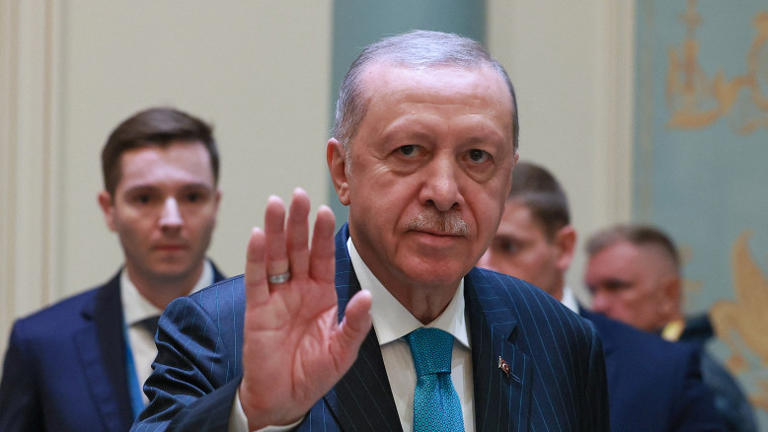
Recep Tayyip Erdogan dropped a diplomatic bombshell on Sunday: Turkey is seriously considering sending military forces to Gaza. The Turkish president, who has previously accused Israel of genocide, announced in Johannesburg that Ankara is examining how to deploy its forces as part of an international force to be established in the Strip. "We will decide after we finish the discussions", he said at a press conference on the sidelines of the G20 summit, leaving the international arena in suspense.
The Turkish move does not emerge in a vacuum. Ankara, the only Muslim member in the Middle East within NATO, played a central role in the negotiations that led to the ceasefire in Gaza. It signed the agreement in Egypt alongside other nations, committing not only to oversee its implementation but also to join the stabilization force to be established. Now, as the agreement takes shape, Erdogan is demanding his share on the ground – in other words: a physical military presence at the heart of the conflict.
The move places Israel in a severe predicament. A state that Erdogan has called a "genocidal entity" may now find itself operating in geographic proximity to Turkish military forces. Relations between Jerusalem and Ankara, once a strategic alliance, have collapsed in recent years. Erdogan has become one of the harshest critics of Israeli policy on the international stage, and the Gaza ceasefire now gives him the golden opportunity to transform speeches into actual presence. The question is not whether Israel will want this, but whether it can prevent it.
According to Reuters, Ankara has positioned itself as a central mediator in the complex political process that led to the ceasefire. This role now grants it significant diplomatic weight, which it is leveraging to achieve a clear objective: returning to the Middle East as a major military player. The Turkish president, who has been promoting for years a Neo-Ottoman vision of Turkey as a regional power, sees Gaza as a gateway. If he succeeds in bringing Turkish soldiers into the Strip under international legitimacy, he will achieve what he has failed to accomplish for a decade: direct military presence at the burning focal point of the Middle East.
But Erdogan is not content with the Middle East alone. He announced that tomorrow, Monday, he will hold a phone call with Russian President Vladimir Putin. The subject: the collapsed grain agreement. After recently hosting Zelensky, Erdogan told reporters he will work to renew the agreement in his conversation with Putin, despite Turkey's previous attempts to reach an understanding having failed. In doing so, he positions himself as an indispensable mediator in two burning hotspots in real time: Gaza and Ukraine.
The dual move reveals the Turkish strategy: to secure a seat at every regional or international negotiation table. Ankara is exploiting its unique position – a NATO member on one hand, close to Moscow on the other, speaking on behalf of the Muslim world on a third – to become indispensable. Every side needs it, and therefore no side can ignore it. This is diplomacy of power, not of values.
The central question now hovering over all these moves is simple: what will happen when a decision is made in Ankara? If Turkey indeed decides to send soldiers to Gaza, it will create a new precedent. This would be the first time in decades that forces from a Muslim NATO state would deploy at the heart of the Israeli-Palestinian conflict. The implications will be far-reaching – for Israel, for the region, and for the balance of power that has crystallized over generations.
Erdogan is well aware of this. Apparently, he is operating on two tracks simultaneously – in Gaza and in Ukraine – and seeking to demonstrate to the world that Turkey is returning to the playing field of great powers. The question is no longer whether he wishes to establish himself as "the new boss of Gaza", but when he will choose to do so.
Photo: Reuters