

A terrorist from Hamas's Nukhba unit, who participated in the horrific massacre of October 7, was brought last night to Kaplan Hospital in Rehovot for comprehensive medical examinations – which sparked deep anger and pain among the medical staff. The terrorist, who arrived under heavy security from the Sdeh Teiman base where he is held in detention, suffered from dizziness and headaches that raised concerns of a stroke.
As part of the medical investigation, the terrorist underwent advanced imaging tests including MRI and CT. After it was determined that he had not suffered a stroke, he was returned to the detention facility. However, his presence in the hospital created a crisis among the medical staff, when an orderly adamantly refused to take part in treating the terrorist.
The dramatic event reached its peak when one of the hospital employees, who lost her nephew in the October 7 massacre, emotionally collapsed when she realized the terrorist was in the department. Her colleagues immediately came to her assistance.

According to official Ministry of Health procedures, hospitals in Israel are obligated to provide medical treatment to terrorists in cases where the required treatment is not available in detention facilities. The healthcare system manages a rotation policy between different hospitals, with recent reports of terrorists being treated at both Sharon Hospital and Ichilov.
"This is a sensitive issue for hospitals, which deal with complexities involving patients and staff members, alongside their commitment to treat every person," the hospital reported to the media.
The case illustrates the deep conflict between the medical teams' professional duty and the collective and personal trauma that has befallen the people of Israel following the unprecedented terrorist attack in history. While medical teams are called to fulfill their professional oath, they themselves struggle with the abyss of pain and shock in the face of the atrocities committed by the terrorists.
This affair raises weighty moral dilemmas regarding the psychological and moral price paid by medical professionals, who are required to extend a healing hand to perpetrators of crimes against humanity, while they themselves or their loved ones have fallen victim to these atrocities.
The paradox is intensified by the fact that while our hostages are begging for basic medical care in captivity, we in Israel are providing advanced medical treatment to terrorists – treatment that costs tens of thousands of shekels from taxpayers' money – when these same terrorists might be released in some future deal.
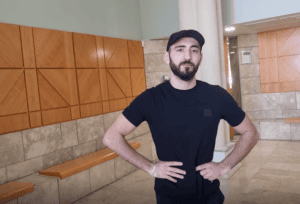
Photo: Nukhba terrorist in Israel Prison Service facility (archive). Photo: IPS Spokesperson's Unit