
Dim Amor
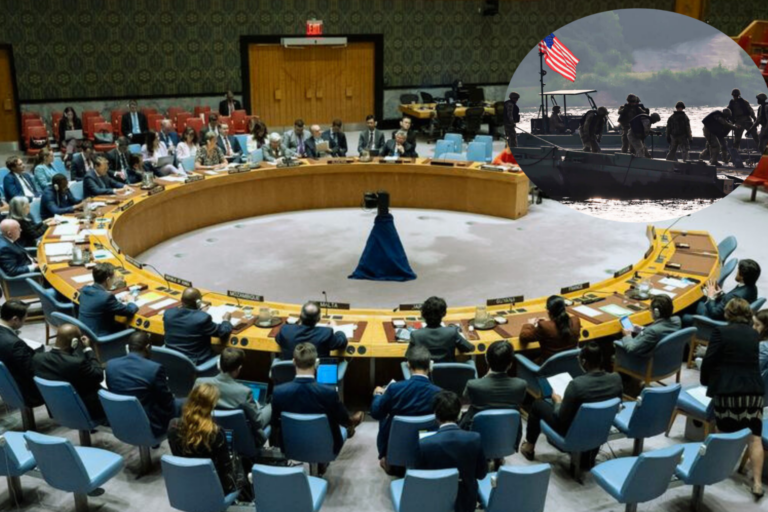
An emergency session was held today at the UN Security Council in New York after the Venezuelan government submitted an urgent request to convene a discussion against the backdrop of sharp escalation between Caracas and Washington. According to a report by the Russian news site "Rambler," the session included live translation into Russian and was broadcast in real-time worldwide. At the heart of the crisis lies a series of American military operations in the Caribbean Sea that claimed the lives of dozens of people and brought the Latin American region to the brink of dangerous escalation.
Venezuelan President Nicolás Maduro sent an official letter to Russia's Permanent Representative to the Security Council, Vassily Nebenzia, claiming that the administration of US President Donald Trump is preparing to carry out an armed attack against his country. In the letter, Maduro accused the US of growing threats and advanced preparations for a military operation aimed at overthrowing his regime. According to the Venezuelan president, Washington is using the purported fight against international drug trafficking as an excuse and cover for an attack whose real purpose is regime change and seizure of Venezuela's vast natural resources.
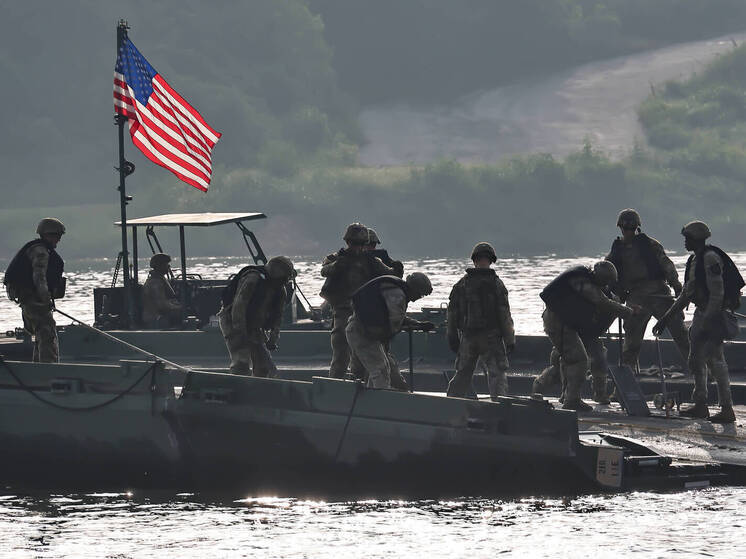
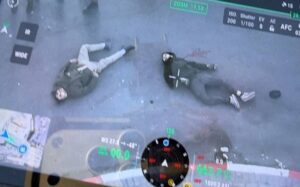
The immediate background to the crisis is a series of missile strikes carried out by the US Navy in recent weeks against ships in the Caribbean Sea, near Venezuela's coast. During four separate operations, US Navy vessels attacked ships that, according to the Pentagon, were involved in drug smuggling. The strikes resulted in the deaths of twenty-one people, a figure officially confirmed by the Venezuelan government only after initially denying the incidents and claiming they were fake news created using artificial intelligence. The change in Caracas's official position came after President Trump released a documented video showing moments of the attack, forcing Venezuela to acknowledge the events and formally approach the Security Council.
The Trump administration, for its part, justifies the military actions as part of its policy to combat drug cartels. The American president defined the operation as part of a large-scale armed confrontation against organized crime organizations based in Latin America. According to the American position, all four attacked ships sailed from Venezuelan territory and carried cargoes of dangerous drugs destined for the American drug market. According to administration sources, the military operations are part of a broader campaign to eradicate drug trafficking that threatens, they claim, US national security.
However, Venezuela firmly rejects Washington's explanations. Venezuela's representative to the UN Security Council, Samuel Moncada, stated during the discussion that the true motive for American actions remains the same as it has been for the past twenty-six years: an attempt to replace the regime in Caracas and seize Venezuela's enormous oil and gas resources. Moncada added that the purported fight against drugs is a transparent excuse designed to justify foreign military intervention in a sovereign state.
The dramatic escalation in tensions came just one day after the US Congress rejected a bill designed to limit the president's authority to use military force against drug traffickers without obtaining explicit congressional approval. The rejection of the bill means that President Trump now has complete freedom of action to continue and even intensify military operations in the Caribbean region without strict oversight by the legislative branch. The parliamentary move added fuel to the crisis and intensified fears in Caracas of expanded American activity.
Parallel to the military and diplomatic discussions, a public debate also erupted between US Secretary of State Marco Rubio and President Maduro. Rubio accused Venezuela's military of direct involvement in cartels and drug smuggling, declaring that Venezuelan security forces collaborate with international crime organizations. Maduro sharply rejected the accusations and stated that he defends the morality of his soldiers and that the Venezuelan military is not involved in drug trafficking. The Venezuelan president attacked Washington and accused it of attempting to defame state institutions in order to justify intervention.
The tension between the two countries unfolds against the backdrop of an ongoing diplomatic crisis that has lasted for years. The US has been offering a fifty-million-dollar reward for several years for information leading to the arrest of Nicolás Maduro, whose government has not been recognized by Washington since the elections held in Venezuela in 2024. The US claims the elections were rigged and that Maduro continues to rule by force against the will of the Venezuelan people. The American position is that the regime in Caracas is dictatorial and must be replaced by a democratic government.
Venezuela's appeal to the Security Council was submitted just hours after the announcement of the Nobel Peace Prize being awarded to Venezuelan opposition leader María Corina Machado. The announcement of the prize was perceived in Caracas as a moderately provocative step and added fuel to the diplomatic tension. Machado, who is considered the most prominent political leader against Maduro's regime, has gained broad international recognition in recent years for her activities promoting democracy in Venezuela. The awarding of the prize at this time is perceived by political analysts as a clear message from the international community to the regime in Caracas.
During the Security Council discussion, sharp disagreements erupted among world nations. Russia and Somalia strongly opposed the American military presence in the Caribbean region and accused Washington of aggression and violating the sovereignty of an independent state. The Russian representative at the Council attacked the US and accused it of unlawful use of military force and violation of fundamental principles of international law. China joined the sharp criticism and also accused the US of aggression and attempting to topple a legitimate regime through military force.
On the other hand, Britain called for diplomatic pressure on Venezuela to prevent it from continuing to serve as a base for drug trafficking. The British representative emphasized that although London supports efforts to eradicate drug trafficking, it opposes direct military invasion of a sovereign state and calls for a diplomatic solution to the crisis. Greece expressed general support for US policy but added a similar warning, emphasizing that ways must be found to deal with the challenge without reaching full military confrontation.
Israel joined the US position and expressed support for the military operations against drug-smuggling ships. The Jerusalem government viewed the operations as part of a legitimate effort to combat international organized crime and drug trafficking that endangers the security of entire regions.
The US representative at the Security Council vigorously defended the military actions and declared that a dictatorial regime reigns in Venezuela that endangers the entire region. The American representative argued that Venezuelan drugs constitute a direct threat not only to US security but to the entire world, and that Washington cannot stand aside and ignore the ongoing danger. The representative added that the Venezuelan government is deeply involved in drug trafficking and it is impossible to separate the regime from the cartels.
Western analysts warn that the situation around Venezuela is approaching an extremely dangerous point very rapidly. International relations and security experts emphasize that the international community urgently needs to find effective diplomatic mechanisms to curb escalation before the situation spirals out of control. The fear is that if a political solution is not found, the region could find itself in a storm of military confrontation involving global powers and dragging severe consequences for all of Latin America.
As of this time, the discussion at the Security Council is still ongoing. No vote on any resolution has yet taken place and no official decision has been made. The international community is waiting anxiously to see whether the Council will succeed in reaching agreement on a mechanism to calm the situation, or whether the crisis will continue to worsen and lead the region to a state of open confrontation between Venezuela and the US.
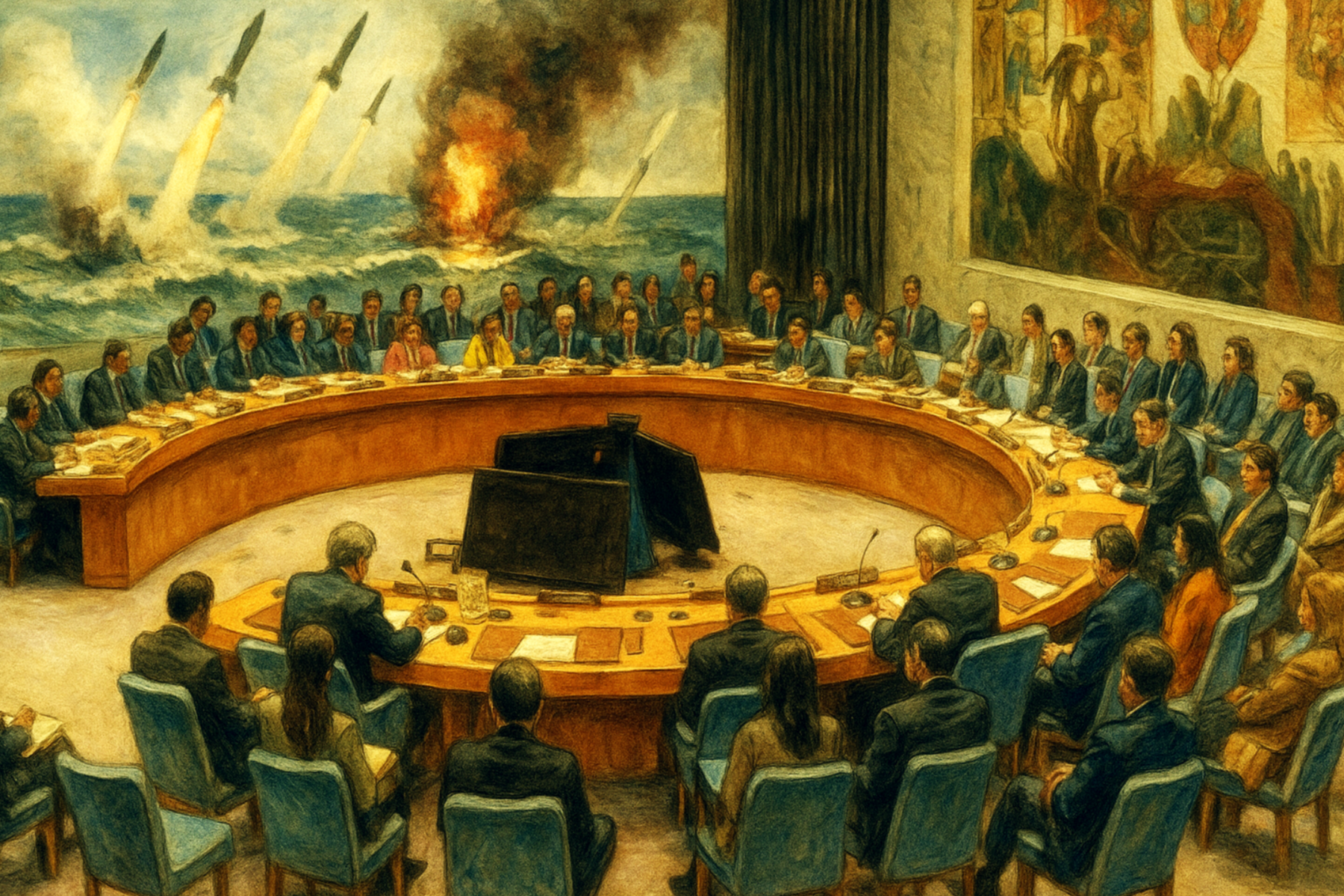
Photo from live broadcast from the UN – in accordance with Section 27A of the Copyright Law