


Dim Amor
Israel Beiteinu Chairman Avigdor Lieberman launched a sharp attack this week against Prime Minister Benjamin Netanyahu, accusing him of turning Israel into a third world country and surrendering to economic challenges. This attack comes against the backdrop of Netanyahu's remarks at the Accountant General's conference at the Ministry of Finance, where he addressed the challenging international situation and the need to develop economic independence.
Lieberman, who published his remarks on social media platform X, sharply claimed that "instead of sending a winker to Switzerland, Netanyahu is turning Israel into a third world country". He continued and accused the Prime Minister of "wanting Israel to get used to isolation, to a closed market, without competition and without oxygen for the economy". According to the Israel Beiteinu chairman, this is not a work plan but surrender and admission of failure.
Lieberman's attack comes as a response to Netanyahu's remarks at the Ministry of Finance Accountant General's conference held on September 15 at the Nation's Buildings in Jerusalem. At the conference, the Prime Minister spoke about the resilience of the Israeli economy and praised Finance Minister Bezalel Smotrich and the Accountant General for what he called "wonderful results of the Israeli economy", emphasizing that "no one expected such results".
However, Netanyahu acknowledged the deteriorating reality in the international arena, noting that it is "becoming increasingly challenging for us day by day under threats of arms embargo and economic sanctions". The Prime Minister attributed this trend to massive Muslim immigration to European countries, which according to him "bends the governments there" to adopt anti-Israeli policies. He claimed this is not only a response to the situation in Gaza, but broader aspirations against Zionism and against the very existence of the state.
From this assessment, Netanyahu drew practical conclusions: "We must focus here on independent industries and security production and maintain a strong economy". Later in his remarks, he addressed the Accountant General with clear guidance: "I instruct you to cut bureaucracy".
Netanyahu's words are supported by data from Israel's financial reports for 2024, published in July 2025. The reports present a complex picture of the economic situation, with assets totaling approximately 2.116 trillion shekels compared to liabilities of 3.624 trillion shekels. The assets mainly include state lands valued at approximately 1.133 trillion shekels, fixed assets and intangible assets totaling approximately 584 billion shekels.
The financial reports reveal the heavy price of the Iron Swords war on the Israeli economy. They include extensive information about government operations to finance war expenses and support the home front, including security system activities, operations for the benefit of evacuees, and rehabilitation of Gaza envelope residents. Additionally, the reports also refer to activities undertaken in 2025, including reference to Operation Am Kelvia from June.
Lieberman, who serves as Israel Beiteinu chairman, presented an alternative to Netanyahu's approach. He promised that "we will establish a Zionist and liberal government that will return Israel to track: open the market to competition, break up monopolies, reduce regulation, close unnecessary government ministries, and increase the income of Israeli citizens". This alternative stands in sharp contrast to Netanyahu's approach, which focuses on economic independence and development of local industries.
Lieberman's criticism comes at a time when Israel faces significant economic challenges. The financial reports show that the state's liabilities include National Insurance Institute obligations to insured parties totaling approximately 1.108 trillion shekels, obligations regarding employee rights totaling approximately 752 billion shekels, and obligations regarding domestic and foreign loans totaling approximately 1.384 trillion shekels.
Despite the challenges, the reports also show achievements in certain areas. In 2024, approximately 48,000 housing units were marketed for residential use compared to approximately 35,000 in the previous year, indicating improvement in the housing sector. Additionally, government investments continue in projects in cooperation with the private sector in transportation, water, energy, environment, and construction fields totaling tens of billions of shekels.
The reports also refer to the government's obligation regarding budgetary pensions, which stood in 2024 at a total of 716 billion shekels compared to 747 billion shekels in the previous year. The change stems mainly from the rise in interest rates, reflecting the impact of the global economic situation on the Israeli economy.
The dispute between Lieberman and Netanyahu reflects a deep division in the Israeli political arena regarding the appropriate way to deal with current economic challenges. While Netanyahu calls for developing economic independence and local industries as a response to international challenges, Lieberman advocates for opening the market, increasing competition, and reducing regulation as a way to increase citizens' income.
Dealing with the effects of the Iron Swords war remains a central challenge, as emerges from the financial reports. The actions taken by the Accountant General's office to ensure functional continuity in the economy include a wide range of measures, from supporting evacuees to rehabilitating combat areas. The reports emphasize that their purpose is to reflect to the general public the government's steps and their financial implications in a clear and relevant manner.
The growing tension between the two politicians testifies to the heavy dilemmas facing decision-makers in Israel. On one hand, the need to deal with growing international pressures and economic threats, and on the other hand, the aspiration to maintain economic growth and a high standard of living for citizens. These debates are expected to continue and remain at the center of public discourse in Israel, especially in light of the prolonged consequences of the war and ongoing geopolitical challenges.
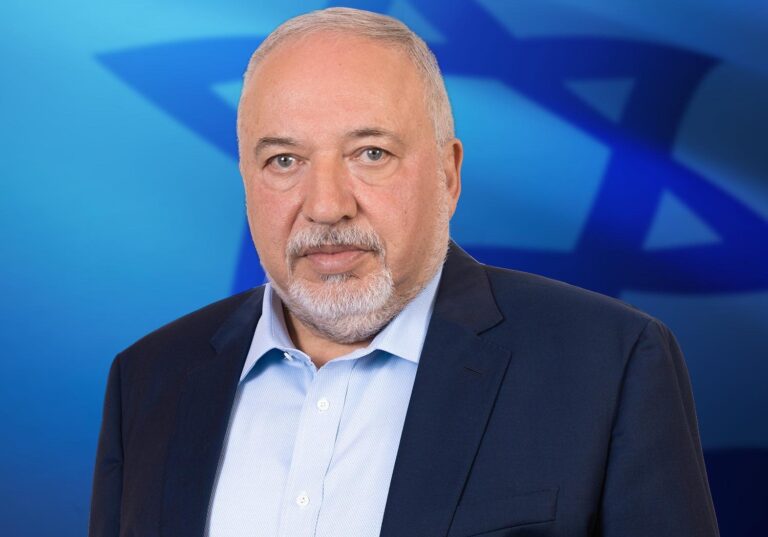
Photo: Avigdor Lieberman, from his official Facebook page – use in accordance with Section 27a of the Copyright Law