




Dim Amor
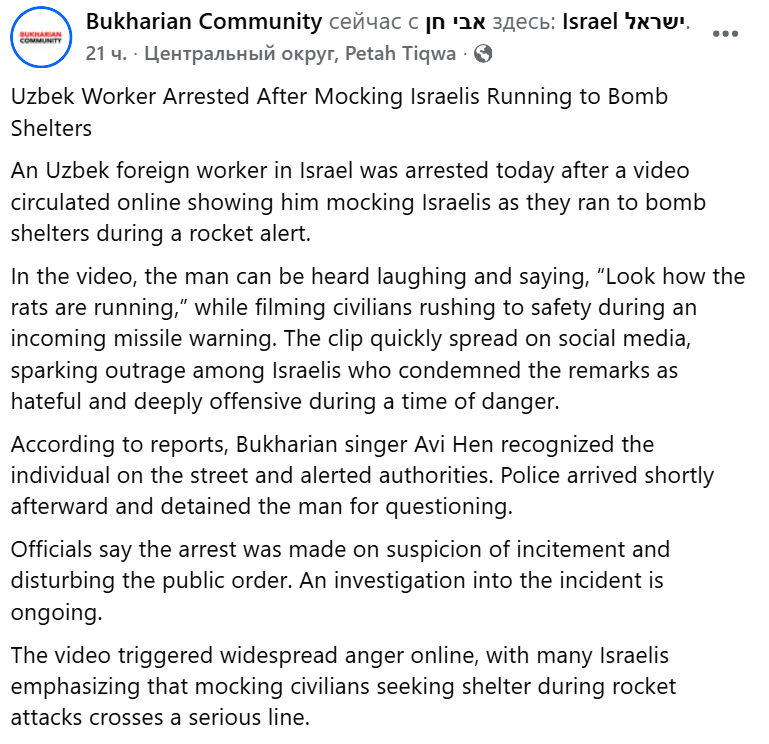
Unprecedented public outrage has erupted following the circulation of a degrading video on social media. A foreign worker from Uzbekistan was filmed mocking civilians rushing to shelters during a rocket alert. "Look how the rats are running", the suspect is heard saying while recording people seeking safety. Singer Avi Hen, who recognized the man and helped lead to his detention, now warns of a potential "diplomatic incident". The Maakav news system conducted an in-depth review of the alleged incitement case and the troubling background of antisemitic incidents in the suspect’s country of origin.
At a time when Israeli civilians face daily missile threats, the video exposed what many described as a particularly disturbing example of cynical exploitation and humiliation of people during moments of danger. The Uzbek foreign worker was detained yesterday on suspicion of serious incitement and disturbing public order after posting a video in which he appears laughing at Israelis rushing to find shelter from incoming rockets.
The video, initially published on the Facebook page "Bukharian Community", quickly became a focal point of public outrage. In the footage, the suspect can be heard filming people attempting to save their lives during the sounding of the siren, repeatedly using the derogatory term "rats" while laughing at their panic. The clip, which accumulated thousands of views and angry reactions, was widely described by viewers as "a severe and unprecedented crossing of a red line".
The street encounter and dramatic detention
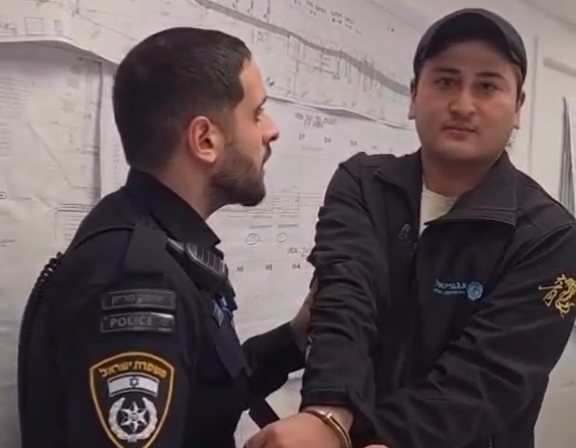
The individual who ultimately brought the incident to an end was singer Avi Hen, who recognized the man on the street shortly after the video circulated online. Hen immediately alerted police officers and assisted in detaining the suspect at the scene. In a conversation with the Maakav newsroom, Hen confirmed that the man had indeed been detained, but spoke cautiously about the ongoing handling of the case.
According to Hen, he has no interest in creating "turmoil" or triggering diplomatic tensions with the Government of Uzbekistan, and therefore declined to disclose additional identifying details such as a police case number.
However, footage of the detention shows the suspect continuing to behave provocatively. He is seen laughing in the faces of police officers and Avi Hen, claiming that he does not speak Hebrew and demanding legal protection. In his defense, the suspect argued that his remarks were directed only at his friends and not at Jews or Israelis, and he also mentioned the Uzbek ambassador as someone allegedly connected to the matter.
Warning signs? Rising antisemitism in Uzbekistan
The conduct of the foreign worker may not be entirely disconnected from the broader social atmosphere in his country of origin. A review conducted by Maakav indicates that between 2023 and 2025 there was a concerning rise in antisemitic incidents in Uzbekistan, a country where the once-flourishing Bukharian Jewish community has been steadily shrinking.
Desecration of synagogues: In November 2023, pro-Palestinian graffiti and hate slogans were sprayed on the walls of the central synagogue in Tashkent. A similar act of antisemitic graffiti was reported again in 2024.
Physical violence: In late October 2023, two members of the Chabad movement were reportedly assaulted in central Tashkent, an incident that caused significant concern within the local Jewish community.
Religious incitement: Reports by the United States Department of State indicate that influential religious bloggers in Uzbekistan have circulated openly antisemitic content on social media, blending political rhetoric with religious hatred toward Jews.
Criminal proceedings in the country: In 2025, an Uzbek religious figure was prosecuted on charges of promoting extremism and inciting hatred against Israel, reflecting the seriousness with which authorities there have addressed the phenomenon.
Despite these reports, the Organization for Security and Co-operation in Europe (OSCE) notes that Uzbekistan has refrained from providing official hate-crime data for several years. As a result, the full scope of the phenomenon remains unclear, though the incident documented in Israel sheds a partial spotlight on underlying hostility that may exist beneath the surface.
Embassy declines to comment
The Maakav newsroom contacted the Embassy of Uzbekistan in Israel seeking clarification regarding the alleged involvement of the ambassador and potential disciplinary measures against the national involved. The embassy acknowledged awareness of the incident; however, as of this moment – despite repeated written and telephone inquiries – no substantive response has been provided.
The suspect remains in detention on suspicion of incitement, while many Israelis are demanding answers: how can a person living and working in the country allow himself to mock its residents at one of their most vulnerable moments? The investigation remains ongoing, and both the Bukharian community and the wider public are closely watching the actions of law-enforcement authorities as they await further developments.
Photo: Avi Hen and Bukharian Community – used in accordance with Section 27A of the Copyright Law.