


Dim Amor
Ankara is intensifying its diplomatic and economic assault on Israel in an attempt to position Turkey as a central player in the Middle East, according to an analysis of government statements, policy actions, and media campaigns conducted over recent weeks. Although no direct military threat has been issued in the past 24 hours, the extensive system of pressures Turkey is exerting on Israel creates a picture of ongoing escalation on political, economic, and public fronts.
Turkey's Foreign Ministry has published a series of harsh statements against Israel in recent weeks, including accusations of violating the ceasefire in the Gaza Strip, deliberately targeting civilians, and breaching international law. Ankara claims that Israel constitutes a factor threatening regional stability and that its actions in Gaza represent a "clear violation" of international agreements. Simultaneously, the Turkish Foreign Ministry has accused Israel of conducting "dirty propaganda" and spreading lies about Turkey. The diplomatic language being employed exceeds what is customary in relations between states and crosses the boundaries of accepted norms in the international arena.
Beyond the harsh rhetoric, Turkey is taking dramatic economic steps. The Turkish Trade Ministry has comprehensively blocked all imports and exports between the two countries, a move defined as temporary but still in effect. Ankara presents the economic blockade as a response to what it calls "prevention of humanitarian aid to Gaza", but in practice this is an unprecedented action in its scope that transforms the economy into a tool of direct pressure on Israel. The step sends a clear message: Turkey is prepared to act aggressively on the economic front to influence the determination of Israeli policy.
Turkish media has adopted particularly incendiary and harsh discourse toward Israel in recent months. Research conducted at Turkish universities indicates very high levels of hostility among the Turkish public toward Israel. Surveys showed that over 90 percent of the Turkish public does not accept Israel's arguments regarding self-defense. These data testify to the depth of public bias as well as to the ability of government authorities and media in Turkey to exert internal pressure that leads to constant rhetorical escalation.
Research circles in Europe and the Middle East present a broader picture of the Turkish movement. Ankara seeks to position itself as a central player in managing the Palestinian conflict and other regional conflicts. The Turkish call for active participation in rehabilitating combat zones, in mediation, and in direct involvement in Gaza is not only an expression of support for the Palestinians but part of a broad strategy to establish a dominant status for itself in the regional arena. These positions clash with Israeli interests, which seek to prevent the penetration of additional parties into the regional decision making circle.
Turkish rhetoric also includes setting a "line of conditions" for re-normalizing relations with Israel. Repeated messages from Ankara emphasize that normalization of relations will be conditional on the possibility of unimpeded entry of humanitarian aid into the Gaza Strip, commitment to a stable ceasefire, and adoption of policies aligned with Palestinian interests as Turkey interprets them. This is a clear attempt to create indirect pressure on Israel – not on the direct military level, but on political and economic levels – with the aim of forcing a policy change.
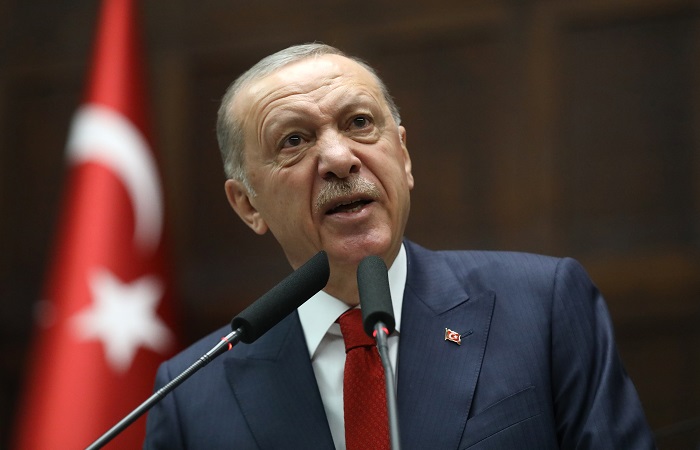
Analyses published in recent weeks describe an increase in Turkey's attempts to influence international public opinion through planned media campaigns. Simultaneously, harsh messages are being directed personally at Israeli officials. Turkish President Recep Tayyip Erdoğan presents Israel in public statements as an aggressive state, lacking legitimacy and posing a threat to regional peace. Reports also appear in Turkey presenting Israel as acting against Turkey's independence. These are not isolated incidents but part of a comprehensive media process.
The findings indicate that Turkey is operating through a combination of soft power and economic power with the aim of exerting maximum influence on Israel. At times, Ankara even attempts to bypass other international parties in order to position itself as a leading force in regional policy discussions. The Turkish move is built on three central axes: use of harsh diplomatic language that blurs the boundaries of accepted norms; deployment of aggressive economic measures that transform trade into a political weapon; and leading media campaigns that shape hostile public consciousness toward Israel both in Turkey itself and in the international arena.
Although there is no explicit military threat from Turkey on the near horizon, and this must be clearly emphasized, the overall trend raises concern. The combination of inflammatory rhetoric, unprecedented economic steps, and unilateral conditions for diplomatic relations indicates a Turkish policy aimed at changing Israeli conduct in the region. Turkey is attempting to force Israel to adopt policies that align with Turkish interests, while exploiting diplomatic, economic, and media tools.
The emerging reality requires Israel to take Turkish moves seriously. The connection between aggressive rhetoric, hostile economic actions, and attempts to expand Turkish influence in the Middle East could create unexpected pressures in the future. Ankara presents itself as a state prepared to employ a variety of tools with the aim of reshaping the regional geopolitical map, even if the price will be damage to its relations with Israel and other countries.