



Dim Amor
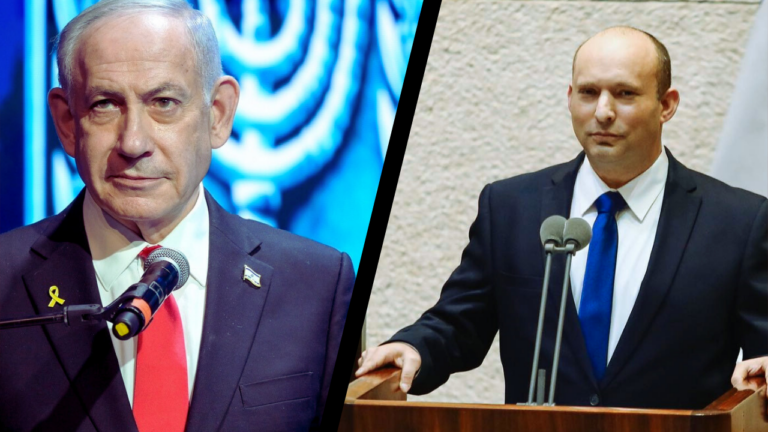
Israel's 13th Prime Minister, Naftali Bennett, published a sharp statement this week on social network X: "Hamas has retaken control of Gaza and continues to strike us with the goal of destroying the State of Israel. Hamas must be destroyed". The post sparked a storm of responses exposing a deep gap between political rhetoric and ground reality, and recalls a history of unfulfilled promises.
Blogger and right-wing activist Mordechai David was the first to attack Bennett's declaration: "Aren't you the one who called for a ceasefire and leaving Hamas in power to bring back the hostages? If I'm not mistaken, you called for ending the war even before Sinwar was eliminated and before Gaza was destroyed as it is now". The response points to an internal contradiction in Bennett's positions, as he previously called for an arrangement that would include Hamas in power.
On the other hand, Orly Harel tried to defend Bennett: "Only the next Prime Minister Naftali Bennett is capable of dealing with the mission facing Israel. Just as he fought decisively against incendiary balloons and crime in the Arab sector, so he will act to eliminate Hamas. Less talk, more action".
But Tal Forkosh raised a sharp point: "You sound exactly like Ben-Gvir, Smotrich, Eliyahu, Strook. Why should we choose you?". The response emphasizes the painful irony: Bennett's rhetoric is almost identical to that of other politicians he himself criticized in the past, and raises a fundamental question: what really distinguishes between the various promises to destroy Hamas?
The data from the battlefield tells a complex story. After nearly two years of war, many soldiers were killed, and the army succeeded in eliminating some of the organization's senior commanders. However, Hamas has not been destroyed. The hostage deal included the release of active terrorists, including Hamas fighters, indicating that the organization continues to function. The idea and spirit of the terrorist organization remain intact, and thus an extensive military operation ended in a kind of strategic draw.
However, Bennett's declaration to destroy Hamas is not new. In fact, it echoes an even older promise from the current Prime Minister, Benjamin Netanyahu, who has made similar promises since 2009.
In January 2009, on the eve of elections to the 18th Knesset, Netanyahu declared in a campaign message: "There is only one action that will do it – topple Hamas rule in Gaza". The statement was also recorded in parliamentary protocols. Sixteen years have passed since then, and Hamas rule in Gaza not only did not collapse but carried out the deadliest attack against the State of Israel on October 7, 2023.
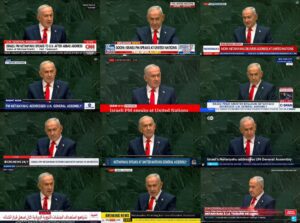
In August 2014, in the midst of Operation Protective Edge, the Prime Minister's Office issued an official statement: "We have dealt heavy blows to Hamas… We will continue for as long as necessary". About a month later, in September 2014, Netanyahu stood on the UN podium and declared: "ISIS is Hamas and Hamas is ISIS". The direct comparison to the Islamic State organization was intended to completely delegitimize Hamas, but despite the fiery rhetoric, the terrorist organization continued to control the Strip.
At that time, in July 2014, the Washington Post reported that Netanyahu said after a ceasefire failed: "Our answer is fire." A Voice of America correspondent on July 28, 2014, reported that Netanyahu called for preparing for a "prolonged campaign" against Hamas. At that time, in an internal discussion in the security establishment, the then-Defense Minister Moshe Ya'alon said: "It would not have been correct to set the army the goal of toppling Hamas". Ya'alon's testimony shows that the discourse about "toppling Hamas" was on the discussion table but was not implemented in practice.
In Operation Guardian of the Walls in May 2021, Netanyahu returned to his familiar threats. The British newspaper The Guardian reported on May 12, 2021, on his words: "We will strike them with blows they never dreamed of". About ten days later, after the ceasefire, the NY Post reported that Netanyahu threatened a "new level of force" if Hamas violated the cessation. On May 19, 2021, in a briefing for foreign ambassadors in Jerusalem, Netanyahu spoke about eliminating Hamas commanders and infrastructure. The rhetoric remained consistent: heavy blows, threats, promises of destruction.
The central question that arises is: if Netanyahu has been promising to destroy Hamas since 2009, why did the organization still control the Strip on October 7, 2023? After all, this is a period of over 15 years in which Netanyahu served as Prime Minister for most of the years, a period in which several extensive military operations took place in Gaza. Was the policy a failure? Were there other considerations that prevented complete destruction of the terrorist organization? Is it even possible to destroy an idea, an ideology, an underground organization integrated into a civilian population?
The events of October 7, 2023, occurred on Netanyahu's watch. Thousands dead and wounded, hundreds of hostages, and a sense of absolute strategic failure. The difficulty of destroying an underground organization embedded within a dense civilian population proves to be a much more complex task than political rhetoric. The human and economic cost of prolonged wars is high, and military results do not match promises.
Now, when Naftali Bennett declares: "Hamas must be destroyed", a legitimate wonder is heard: why exactly will he succeed where Netanyahu failed for 16 years? Does he have a different strategy? Different resources? A different vision? Or is this the same empty political promise that serves to capture votes in times of crisis, without a real implementation plan?
The Israeli public, experiencing failure after failure, has been hearing these promises for years. The families of the hostages, the soldiers in the field, the residents of the south and north – all need less promises and more results. The real question is not who will promise the loudest to destroy Hamas, but who will present a realistic, executable plan that takes into account the military, civilian, international, and moral complexity of such a complex mission. Until then, rhetoric will remain rhetoric, and citizens will continue to pay the price.
P.S.
Generally speaking, if Prime Minister Netanyahu had already fulfilled his promise to eliminate Hamas in 2009 – it's possible that October 7 would not have happened at all. Food for thought! And if so, if the Prime Minister at the time did not keep his promises – why should we believe he will keep new promises?
Even on the right side of the political map, they are no longer blind to this; more and more voices, even among his former associates, are beginning to ask this question openly.
Credits: Screenshot from the investigative program "Kochav HaShabbat", filmed on February 3, 2009, as part of Mr. Ishai Cohen's report Photographs of Benjamin Netanyahu and Naftali Bennett – from their official Facebook pages Use is made in accordance with the provisions of Section 27A of the Copyright Law