



Dim Amor
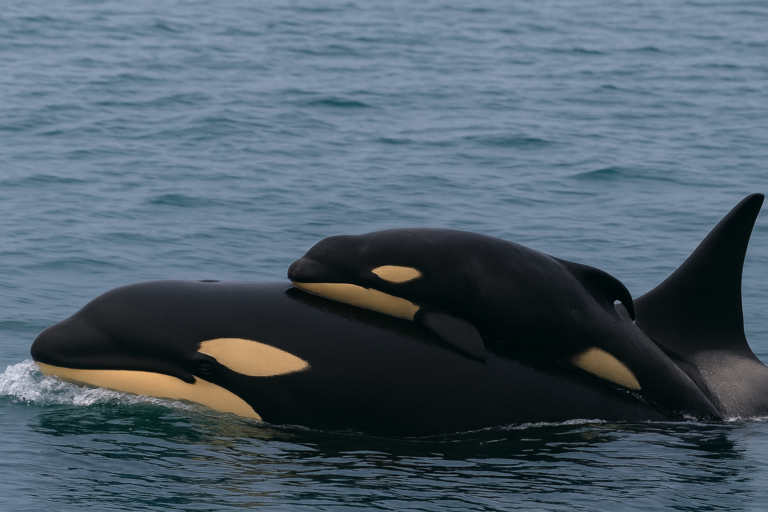
The beginning of 2025 brought with it a chilling image that reopened deep wounds in the world's collective memory. The killer whale J35, known as Tahlequah, was spotted again carrying the body of her dead calf in the waters of western Seattle, in a cycle of grief that returned to haunt her seven years after the event that made her a global symbol of maternal mourning in nature.
Researchers first spotted Tahlequah this year on December 31st off the shores of Alki Point in west Seattle, carrying on her back the body of the tender calf that died shortly after birth. This painful scene inevitably recalled those 17 days in 2018 when Tahlequah carried another dead calf, in a gesture that shocked the world and spotlighted the harsh reality of Southern Resident orcas.
On January 10th, Tahlequah was spotted again in Haro Strait, continuing to carry the dead calf. The harrowing images once again reveal the intensity of the bond between mother and calf among killer whales, creatures considered to possess advanced emotional and social intelligence. Tahlequah's grieving behavior resembles that observed in other social mammals such as elephants and great apes, reflecting the depth of the emotional and social structure of killer whales.
Alongside Tahlequah's personal tragedy, researchers also identified encouraging news in the J pod. An additional new calf was observed in strong and healthy condition, with the identity of the mother and the calf's sex still unknown. The addition of the new calf raises the number of calves under five years old in the pod to 11, including six females—a figure of critical importance for the future reproduction of the dwindling population.
The fact that Tahlequah returns to maternal mourning exposes the brutal reality of the Southern Resident orca population. This unique West Coast population, classified as an endangered species, currently numbers only 73 individuals. The statistics speak for themselves and paint a grim picture: only one-third of pregnancies yield a living calf, and about half of the calves born die before reaching maturity.
Brad Hanson, a biologist at the Northwest Fisheries Science Center, explains that calf mortality at a rate of fifty percent is not unusual among Southern Resident orcas. Despite the harsh data, Hanson emphasizes that orcas are still reproducing and there is hope for improved pregnancy and survival rates in the future. The new calf identified in the pod represents a bright spot in the overall picture.
The death of Tahlequah's current calf underscores the multiple difficulties facing the population. The dramatic decline in salmon quantities, the primary food source for Southern Resident orcas, constitutes one of the main causes of population decline. Salmon habitats have been damaged by years of coastal development, pollution, and climate change, creating a food shortage that underlies the crisis.
Tahlequah has two other living offspring: Phoenix, a four-year-old calf, and Notch, 14 years old, both males. Their presence testifies to Tahlequah's ability to bring living calves into the world, which intensifies the pain of recurring loss.
Facing these challenges, NOAA operates in partnership with numerous research and civilian organizations to protect the population. The effort includes the Center for Whale Research, SeaDoc Society, Orca Network, and hundreds of citizen scientists contributing photographs and current information about the locations of individual whales. The information received enables detailed research and the compilation of accurate health histories that help understand the causes of losses and find solutions.
Washington State enacted a new law requiring vessels to maintain a distance of at least 1,000 yards from any Southern Resident orca, aimed at providing whales with the space needed for foraging, communication, and rest. Simultaneously, the Quiet Sound project operates voluntary seasonal slowdowns of large commercial ships in Puget Sound, which has reduced underwater background noise in the area by fifty percent.
Partners also work to restore critical habitats for young salmon and ensure food availability. Protection of coastal habitats is considered vital for salmon survival, the primary food source of Southern Resident orcas.
Despite extensive efforts, the path to population recovery is long and complex. Hanson admits that sometimes the situation feels desperately difficult, but he maintains long-term optimism about the future of Southern Resident orcas.
The pod is expected to migrate in the coming days from the Puget Sound area to coastal feeding areas. Researchers will continue monitoring Tahlequah and the new calf, hoping that the next story written will be one of recovery rather than additional loss.
Tahlequah's story serves as a mirror to the difficulties facing nature in the 21st century. The whale that became a global symbol of maternal grief continues to remind us of the urgent need for action to save endangered species. The death of another of her calves is not merely a personal tragedy, but a reminder that time is running out for one of the most unique and beautiful marine populations in our world.
Orca Calf Dies – Vessel Noise to Blame
According to assessments, the calf died due to underwater noise and disturbances from vessels. Loud sounds and close contact with boats make it difficult for orcas to hunt, communicate, and navigate in their natural environment—thereby adding another layer of stress on mothers. Here too, humans bear direct responsibility for harming an animal that is endangered.
In Tahlequah's case, the calf died shortly after birth—a phenomenon that is not unusual in the depleted population of Southern Resident orcas. Researchers explain that the success rate of pregnancies stands at only about one-third, and that early calf mortality at a rate of approximately 50% is an almost constant figure.
Therefore, the calf's death is not an isolated event, but another warning sign regarding the dire condition of the Southern Resident orca population: a tiny group of individuals facing severe food shortages, ongoing environmental pollution, noise and human disturbances—and high mortality rates that cast doubt on their survival prospects.
Photo: Maakav