


Dim Amor
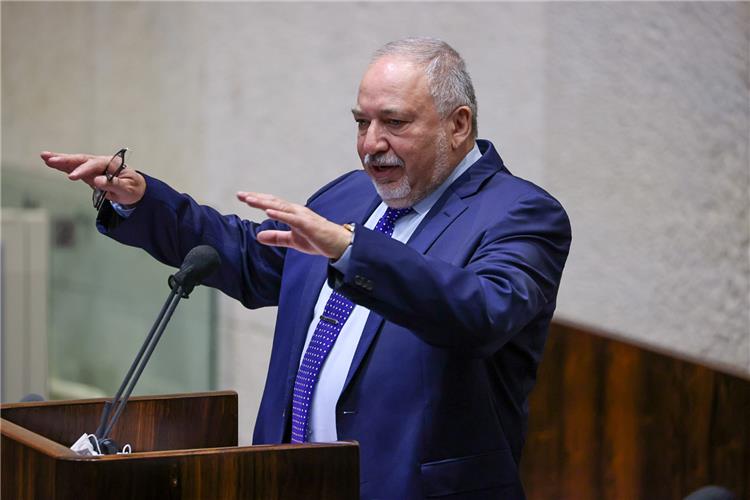
Yisrael Beiteinu Chairman Avigdor Lieberman launched a ruthless attack this week on Prime Minister Benjamin Netanyahu, accusing him of deliberately cultivating Hamas for years and leading a policy that brought about the October 7 massacre. In a scathing post published on X, Lieberman presents a list of serious charges against Netanyahu, from the release of Yahya Sinwar to transferring hundreds of millions of dollars to the terror organization.
"For long years Netanyahu nurtured Hamas – and today we are all paying the price", Lieberman opens his attack. He recalls the 2011 Shalit deal, in which Sinwar was released along with 1,026 other terrorists, contrary to Lieberman's position at the time. This is only the beginning of the list of serious accusations that Lieberman presents against Netanyahu's policy toward Hamas.
Lieberman's harshest attack focuses on Operation "Protective Edge" in 2014. According to him, he then demanded to conquer all of the Gaza Strip and eliminate Hamas, but Netanyahu chose to stop the operation and prefer an arrangement with the terror organization. Lieberman notes that Netanyahu even boasted about this in his book "Bibi: My Story", and he refers readers to page 466 of the book as proof of his claims.
Between 2016-2018, when Lieberman served as Defense Minister, he notes that he repeatedly warned Netanyahu about the growing danger from Hamas. On December 21, 2016, Lieberman delivered to Netanyahu a detailed document demanding a preemptive strike against the organization. In this document, Lieberman claims, he explicitly warned of Hamas's intention to infiltrate Israeli territory using Nukhba forces, capture settlements, take hostages and shock the Israeli public – a description that chillingly recalls the events of October 7.
According to Lieberman, Netanyahu repeatedly prevented targeted operations against Hamas leaders, as testified by senior officials in the security establishment. The climax came at a cabinet meeting held at the Kirya on November 13, 2018, where, contrary to Lieberman's demand to launch a campaign to eliminate Hamas, Netanyahu passed a decision on a ceasefire. Moreover, he announced his decision to pursue a policy of "arrangement" and transfer hundreds of millions of dollars in cash from Qatar to the terror organization.
The day after that meeting, on November 14, 2018, Lieberman announced his resignation from the position of Defense Minister. At the press conference held then, Lieberman said: "The decision on a ceasefire with Hamas is surrender to terror. You are buying short-term quiet at the price of severe damage to long-term national security". These words today sound like an accurate prophecy about what happened on October 7.
Almost two years after the massacre, Lieberman notes, the Prime Minister still has not managed to return all the hostages and is unable to decide and defeat Hamas. He brings to support his claims the words of Minister Bezalel Smotrich from August 9, 2025: "I have lost faith that the Prime Minister can and wants to lead the IDF to decision and victory".
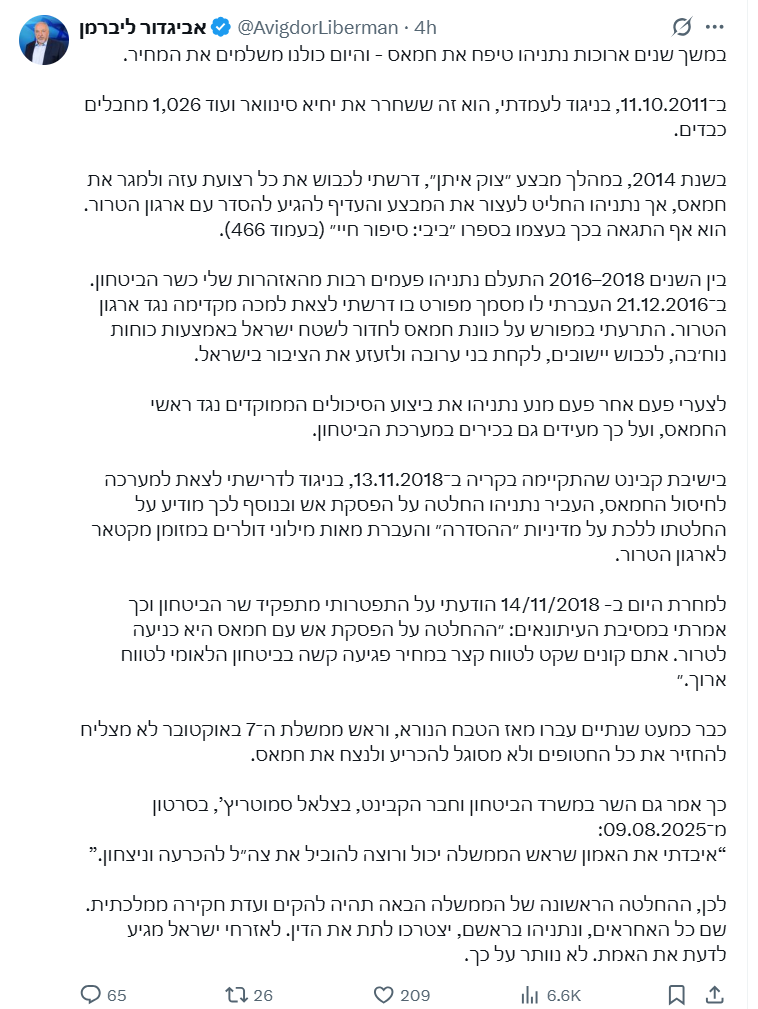
Lieberman concludes his attack with a call to establish a state commission of inquiry: "The first decision of the next government will be to establish a state commission of inquiry. There all those responsible, with Netanyahu at their head, will have to account. The citizens of Israel deserve to know the truth. We will not give up on this".
However, Lieberman is not immune, and sharp criticism is also leveled at him. When he served in the coalition in Naftali Bennett's government, he himself acted similarly to the policy he criticizes today. The obvious question is what is the difference between his term of service and the current policy. This raises the question of whether this is genuine criticism from public responsibility, or perhaps the beginning of Lieberman's early election campaign, especially in light of recent polls giving Yisrael Beiteinu only 5-9 seats.
Lieberman's attack reflects the intensity of the escalating tension in Israel's political system. The events of October seventh and the ongoing war once again raise sharp questions about the responsibility of decision-makers over the years. Whether it is genuine soul-searching or a calculated political maneuver, Lieberman's words return to the center of public discourse the burning question: How is it possible that a terror organization succeeded in carrying out the most severe and cruel massacre in the history of the state, and who will bear responsibility for the series of decisions that led to this disaster?
Photo from the Knesset website, in accordance with permitted use under section 27a