




Dim Amor
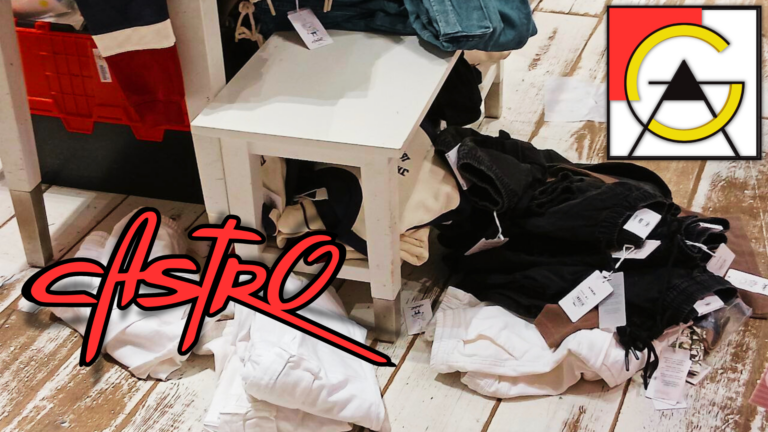
Important clarification: The images presented here do not show a warehouse, do not document trash or waste, and are not the result of artificial-intelligence editing. These are authentic photographs taken inside the Castro store – Holon branch, at Azrieli Holon Mall.
A visit by the "Maakav" team to the Castro branch in Holon revealed a series of unusual findings concerning order, service, and working conditions. For approximately fifteen minutes, according to the documentation, the team walked through the men's and women's sections without encountering a single employee. The atmosphere, as described, felt like an abandoned store, as if it had been left in the middle of a workday.
The store itself appeared, according to the documentation, to be in a state of extreme disorder: clothes were scattered across the floor, customers stepped on them, and fitting rooms were blocked by piles of garments, boxes, and hangers. The overall impression resembled an overloaded warehouse more than a fashion store open to the public.
The situation raised basic questions of hygiene and maintenance. Clothes lying on a floor walked on by customers arriving from the street or restrooms cannot be considered products stored under appropriate conditions. In particular, in the children's and infants' department, small garments were observed lying on the floor near passageways. In such circumstances, it was argued, there could be a risk of transferring dirt or contaminants onto clothing intended for babies and children.
In the children's department, according to the documentation, the situation was especially unusual: promotional tables were placed outside the store, while customers passed by clothing positioned close to the floor. The result was an environment in which children's and infants' garments were exposed to unclean surroundings, potentially undermining parents' and customers' sense of safety.
After about 15 minutes, employees arrived at the store and apologized for the situation. During conversations with several workers from different departments – men's, women's, and children's, repeated complaints emerged regarding employment conditions. According to them, wages are around the minimum level, approximately 34 shekels per hour, and these conditions make it difficult to recruit and retain staff.
Some employees noted high staff turnover and said many workers do not remain for long. They claimed there is no overtime and that salaries change in ways that are not always clear to them. According to their accounts, wages do not match the workload and demands, leading to a lack of long-term commitment to the workplace.
It should be emphasized again that during the visit, some employees appeared genuinely frustrated, although not all agreed to provide testimony or be interviewed.
The atmosphere conveyed a sense of overload and frustration among some of the staff. From the overall picture, it appeared that employment conditions and pay levels affect the store's functioning, its level of order, and the quality of service, and that improving employees' status could also improve operational standards and organization.
During the visit, the issue of in-store promotions was also examined. The inspection found that trousers placed in an area where items were displayed at about 30 shekels were classified at the register as a new-collection item priced at 199 shekels. This means the trousers, which were placed in the promotions section alongside items priced at 29.90 shekels, were apparently positioned there by mistake, against a backdrop of display disorder.
At checkout, it became clear that the item was a pair of jeans from a new collection, placed incorrectly among discounted items. As consumers, we completed the purchase without knowing the item was not part of the promotion, relying on its placement in the discount section and the price displayed nearby. If this was not clear to us, it is likely other customers could have made the same mistake.
Under the law, when an item is presented to the public at a certain price, it must be sold at that displayed price. In this case, that did not occur, raising concerns of consumer deception and deficiencies in display and management practices.
According to the Consumer Protection Law, 1981, a business is prohibited from misleading consumers in any material aspect of a transaction. The prohibition applies even when the misleading act or omission has the potential to deceive, even if no consumer was actually misled. The law addresses, among other things, price, product quality, transaction terms, and other essential details.
In this case, the mere placement of a non-promotional item within a promotions section may be considered misleading, as a customer is entitled to assume that all items in that area are sold at the displayed price.
During the visit, the team documented the state of the store and its departments. Some employees objected to the filming and warned that the chain might take legal action against the team. However, the filming took place during opening hours in a space open to the public, without photographing customers.
Online reviews also reflect a mixed picture. According to Google Business data, the Castro Holon branch has a rating of 3.7. One reviewer, Shimon Ohana, wrote:
"Disgusting attitude. The store manager urgently needs to be replaced. Total mess—physically and in general".
Another reviewer, Nesiya Juhel, wrote:
"Very bad service. I entered the store just to check the price of the shoes, but the employees were more interested in closing the store than helping me. Very disappointing service. If you want people to come and buy, even one second of help could have fixed everything".
User elad176 noted:
"One problem: shared fitting room. One sees the other, haha".
For comparison, in the same mall the Renuar chain holds a rating of 4.4, indicating potential for improvement. In contrast, the Fox chain receives a rating of only 2.8, suggesting there is also room for deterioration. These figures highlight noticeable gaps between the chains operating in the same complex.
However, additional checks by the “Maakav” team showed that not all Castro branches present a similar picture. At the Ayalon Mall branch in Ramat Gan, for example, a rating of 3.9 was recorded, and the store was described as clean and orderly. Likewise, at the Grand Canyon branch in Haifa, which received a rating of 4.0, the store was observed to be neat and well maintained.
It should be noted that a purchase was also made at the Grand Canyon branch. The staff proved professional, courteous, and patient; the fitting rooms were well maintained, and the shopping experience was pleasant and organized. The store operates at a high standard, which only heightened the sense of disappointment at the findings in the Holon branch, where a completely different picture emerged, of a store not functioning properly.
Employees at the Holon branch explained that larger branches have more staff due to higher sales volumes and corresponding bonuses. According to them, most sales at the Holon branch occur during promotional periods, which affects the workload and staffing levels.
According to the 2024 financial reports of the Castro Group, the company recorded revenues of approximately 2.08–2.14 billion shekels for the year. Operating profit stood at about 236 million shekels, and net profit at around 134 million shekels.
For comparison, in 2023 net profit totaled about 42.5 million shekels, meaning that in 2024 the company recorded a sharp increase in profitability. These figures point to a company with annual revenues exceeding two billion shekels and net profits of over 134 million shekels after taxes and expenses.
Meanwhile, employees at the Holon branch note that their wages remain around the minimum level. By comparison, there are chains that pay wages above the minimum, sometimes exceeding 34 shekels per hour. Against this backdrop, the Castro Holon branch appears to experience rapid staff turnover, as workers may prefer workplaces where wages and employment conditions are perceived as more respectable.
Castro responded:
"Castro places the highest importance on service standards, order, and cleanliness in all branches of the chain, especially in children's and infants' departments. A review conducted with the management of the Holon branch indicates that this was a specific and temporary incident that occurred during unusually busy hours in the store. It was not a protest, strike, or systemic malfunction, but a momentary situation created by high customer turnover and simultaneous merchandise arrangement.
Upon receiving the inquiry, an immediate inspection was conducted, and the team was reinforced to restore the store to an orderly condition in accordance with the chain's standards. Staff were also instructed to adhere more strictly to procedures regarding order, storage, and cleanliness, particularly in departments intended for children and infants.
Castro operates under strict cleanliness and hygiene standards and will continue to do everything necessary to ensure a pleasant, safe, and respectful shopping experience for all customers".
At the "Maakav" newsroom, it was noted that alongside the criticism of the branch's condition, the company's spokesperson provided a respectful, professional, and substantive response, which was delivered promptly and in an organized manner.
P.S.
It should be noted that when a chain chooses to employ workers at minimum wage, it often results in minimum productivity as well. This is not only a matter of diminished employee morale, but also a potential blow to the customer experience. A customer entering a store characterized by disorder, clothes on the floor, and a neglected appearance may be deterred from making a purchase, which can ultimately lead to business losses.
During a checkout test conducted to assess the service experience, customers were offered to join the loyalty club, an offer that was declined. Based on the impressions gathered during the visit, the Holon branch received a score of 0 out of 10, as the experience was perceived as unfavorable to customers. In contrast, the Grand Canyon branch received a score of 10 out of 10.