



Dim Amor
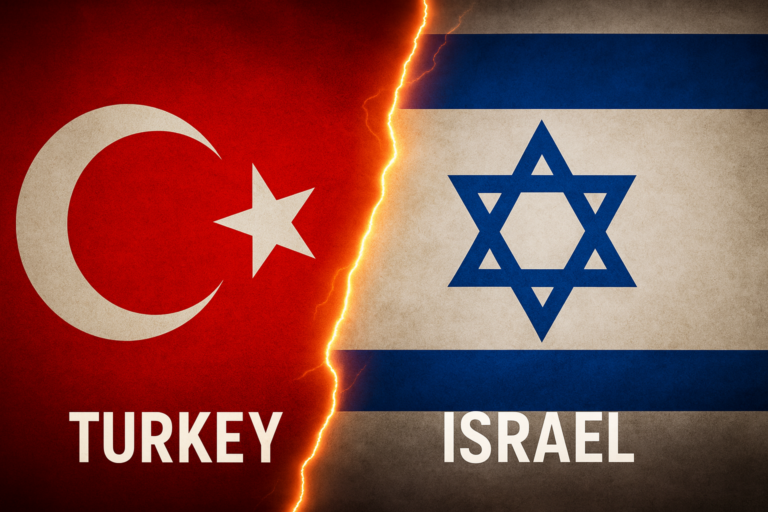
The acute diplomatic crisis between Turkey and Israel, which began following regional tensions since October 7, 2023, quickly transformed into a significant economic crisis for both countries. The freezing of diplomatic relations and cessation of direct trade created shock waves in both countries' economies, but the effects proved to be dramatically different in their scope and nature.
In the first half of 2025, the full picture of economic damage became clear: while Turkey lost an important but relatively marginal source of income for its broad economy, Israel suffered considerable damage in key sectors that relied on extensive Turkish imports.
The sharp data reveals how one-sided the economic connection between the countries primarily was. Israeli exports to Turkey collapsed by 99% compared to the corresponding period last year, while imports from Turkey plummeted by 70%. These numbers expose a clear picture of Israeli economic dependence on the Turkish market in areas critical to the economy.
The immediate impact on the Israeli economy was felt mainly in two central sectors. In construction, considered a critical growth engine in the Israeli economy, reliance on Turkish raw materials was particularly significant. About 35% of cement, copper, and steel that reached the Israeli construction market originated in Turkey. In agriculture, the dependence was lower but still significant, with 10-15% of fruits and vegetables in the Israeli market coming from Turkey.
The sudden blockade of these supply sources initially created delays and widespread uncertainty in the construction industry. Contractors reported difficulties in obtaining raw materials, mainly cement and steel, which threatened to delay projects and raise construction costs in the economy. Simultaneously, the temporary shortage of fruits and vegetables created pressure on prices in local markets.
However, the Israeli economic system demonstrated relative flexibility. The government, in cooperation with private importers, managed to redirect supply sources to alternative countries in relatively short time. Greece, Egypt, and Cyprus became main supply sources for construction materials, while additional countries in the eastern Mediterranean filled the gap in fruits and vegetables.
The transition to alternative supply sources did not pass without cost. Higher transportation costs, extended shipping times, and the logistical complexity of developing new supply chains created additional pressures on sectors already dealing with price increases. In macroeconomic terms, Israel was forced to invest substantial resources in redirecting trade sources and developing new commercial relationships, creating a sense of economic vulnerability and instability.
It is correct to state that the impact on the Turkish economy proved fundamentally different. Although Turkey lost an export market estimated at about three billion dollars annually – an amount that positioned Israel among Turkey's five main import partners before the crisis – Turkey's economy relies on much broader exports, primarily to European countries, Russia, and other Middle Eastern nations.
In relative terms, the volume of trade with Israel constituted only about 2% of total Turkish exports and half a percent of GDP. In other words, while specific Turkish companies in iron, steel, and agriculture sectors suffered real losses and damage to employment, the macroeconomic impact on Ankara remained relatively limited.
From Turkey's perspective, the limited economic damage paled against the political gain in the regional and domestic arena. The measures against Israel gained broad support from the Turkish public supporting the Palestinian struggle, which strengthened President Erdogan's political standing. In strategic terms, Turkey succeeded in strengthening its position as a leading country in the Muslim world and increasing its regional influence.
In tourism, the picture is more complex than prevalent claims about sharp damage. Since October 7, 2023, assessments emerged that Turkey was experiencing a dramatic decline in tourism, especially due to the absence of Israelis. However, data from Turkish authorities paints a different picture.
In 2024, Turkey actually recorded a peak of approximately 52.6 million foreign visitors and revenues of $61.1 billion, a figure indicating the continued attraction of the Turkish destination despite regional tensions. In 2025, a moderate decline is indeed noticeable: between January and July, a decrease of about 2.1% in visitor numbers was recorded compared to the corresponding period last year. In July 2025, a reduction of about 5% was recorded, with 6.97 million visitors compared to 7.33 million in July 2024.
The claim of direct damage on a dramatic scale due to a decline in Israeli numbers is not supported by official data. While the flow of tourists from Israel was damaged following the diplomatic crisis, this concerns a market that does not constitute the backbone of Turkish tourism. In contrast, Russia and Ukraine constitute much more important markets, and precisely here the picture is complex. Alongside declines in certain regions, a 22% increase in visitors from Ukraine to Antalya was reported in 2025.
Economically, tourism revenues continued to constitute one of Turkey's growth engines. Despite fluctuations in visitor numbers, in the first half of 2025, an overall increase of about 9% in visitor quantities was reported alongside a surge of more than 100% in revenues from auxiliary services. The meaning is that tourism may be moderating in quantity but strengthening in quality and consumption.
The picture emerging from the economic crisis between Turkey and Israel is one of distinct asymmetry. Israel succeeded in curbing a sharp price surge through rapid turning to alternative markets, but paid a heavier economic price in the form of inefficiency, dependence on vital raw materials, and undermining the stability of supply chains. On the other hand, while Turkey lost export revenues in the billions of dollars, this damage remained relatively marginal to the dimensions of its broad economy.
The logical conclusion is that the crisis produced two different types of damage: Turkey lost capital, while Israel lost stability.
Graphics: MAAKAV