




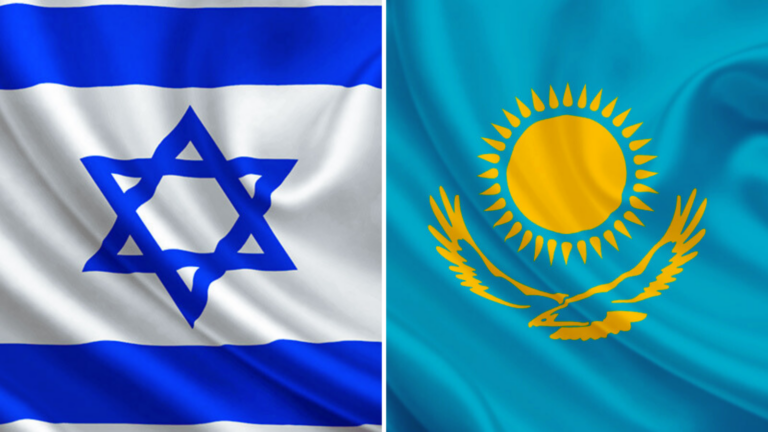
Dim Amor
There is no particular drama or novelty in the announcement of Kazakhstan's accession to the Abraham Accords. The simple fact is that Israel and Kazakhstan established full diplomatic relations three decades ago, shortly after the dissolution of the Soviet Union and Kazakhstan's establishment of independence as a large and important state in Central Asia. Since 2017, eight years ago, Israeli citizens do not even require a visa to enter Kazakhstan's territory.
Prime Minister Benjamin Netanyahu himself visited the country on a historic and important visit in December 2016, the first by an Israeli prime minister to Kazakhstan, and met with then-President Nursultan Nazarbayev. He was preceded by then-President Shimon Peres, who visited Kazakhstan as early as 2009. Relations between the countries are not new, economic cooperation has existed for years, and cultural and commercial exchanges have long been flourishing.
This is certainly not to belittle the importance or status of Kazakhstan, but rather to emphasize that an attempt is being made here to create drama almost by force. A Kazakh source speaking to Haaretz defined the situation most accurately, saying that talks on the Abraham Accords issue have been ongoing for a long time. "We may sign something, but it will be declarative only because we already have relations with Israel and cooperation in various fields", the Kazakh source said, effectively revealing the true essence of the planned step.
The signing of the Abraham Accords, should it occur, will essentially constitute formal confirmation of an existing reality, a kind of diplomatic cover for a relationship system that already exists in practice. This is a symbolic act whose main purpose is to join a more prestigious club rather than to fundamentally change relations between Jerusalem and Nur-Sultan. Economic, security, and academic cooperation between the countries already exists, diplomatic activity is thriving, and Israelis enter and exit the Central Asian country without bureaucratic obstacles.
If this were of course about Saudi Arabia or even Indonesia, then this would truly be real drama. A peace agreement with the Kingdom of Saudi Arabia would constitute a genuine historic breakthrough in the Middle East and would almost certainly change the face of the region for generations. The accession of Indonesia, the world's largest Muslim country, would symbolize an enormous conceptual shift in attitudes toward Israel in the Islamic world. But Kazakhstan, important as it may be, does not represent such a change. Meanwhile, the real drama is not happening.
The basic message is simple: instead of getting excited about the formal accession of a country that already maintains excellent relations with Israel, attention should be directed to the question of why the countries that truly change the game are still absent from the agreements. The Kazakh step is legitimate and positive, but it is not a diplomatic revolution. It's a status upgrade, not a reality change.